
Last updated September 19, 2026
Full 25-point door and opener safety check with every visit - springs, cables, rollers, tracks, and your LiftMaster or Chamberlain opener included
You get a price before we start. It does not change when the truck arrives.
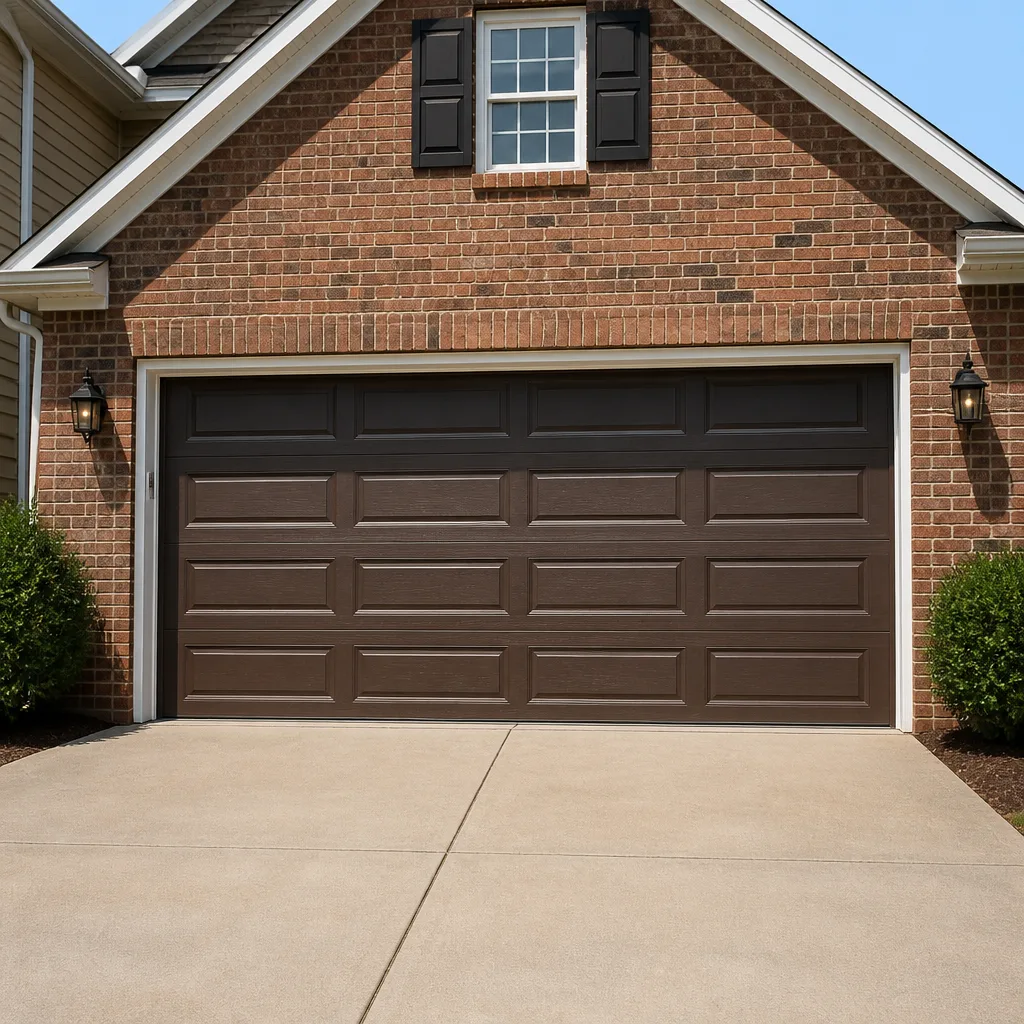
Carriage house
Full-view glass
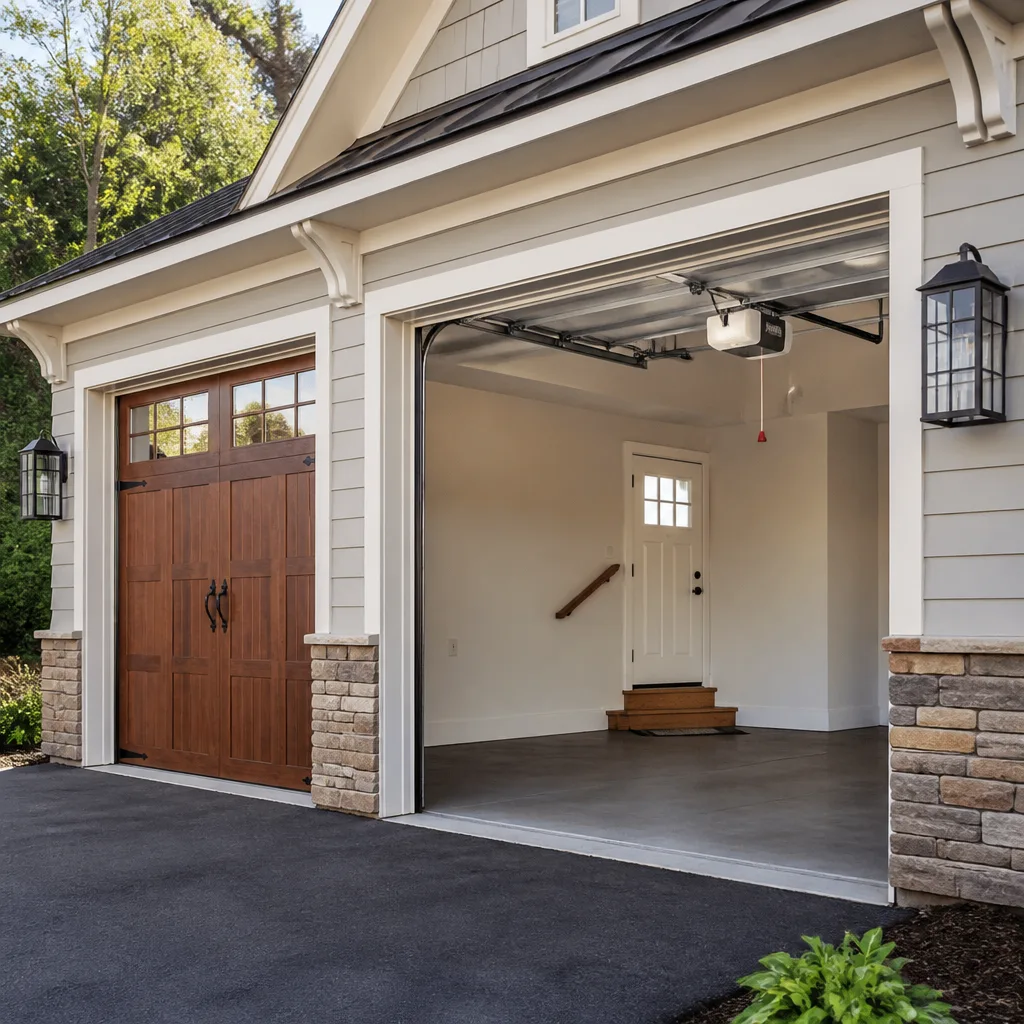
Chamberlain openers
 Before
 After
After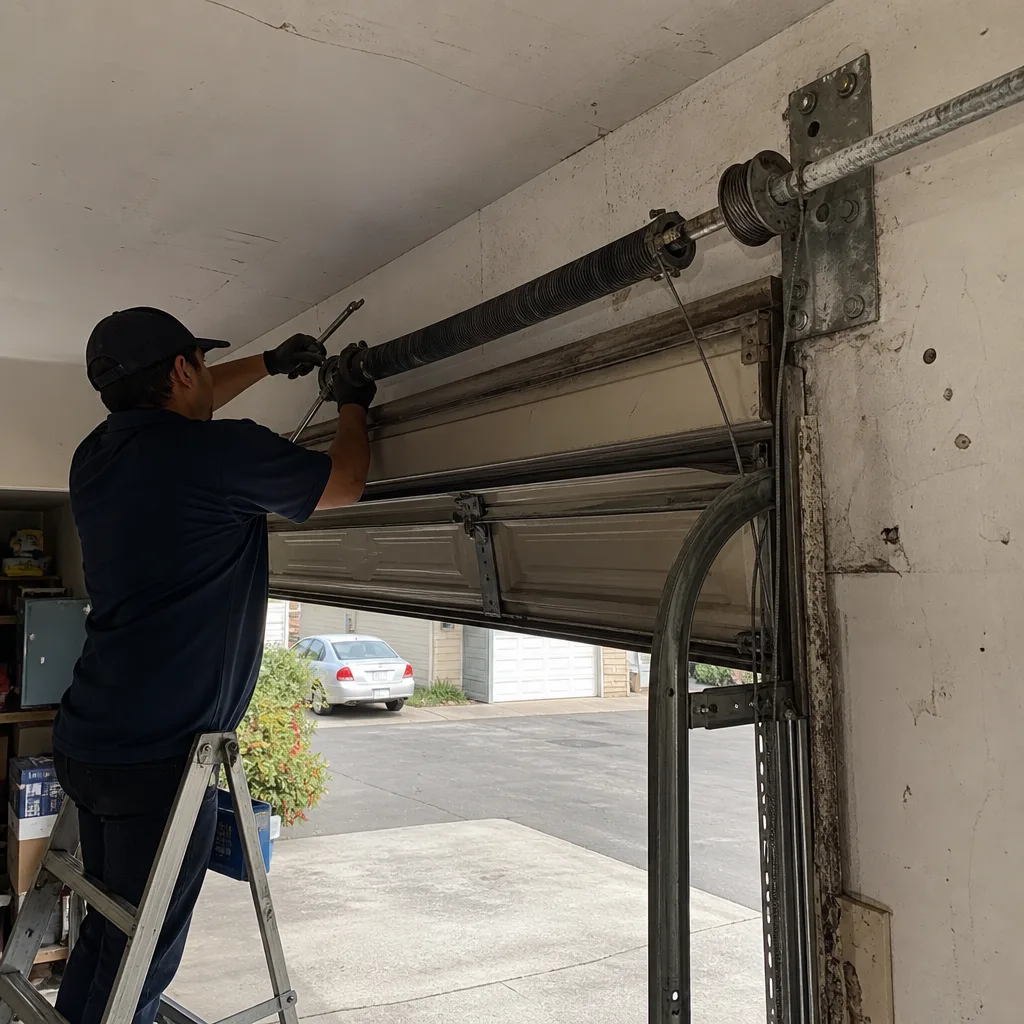 Before
 After
After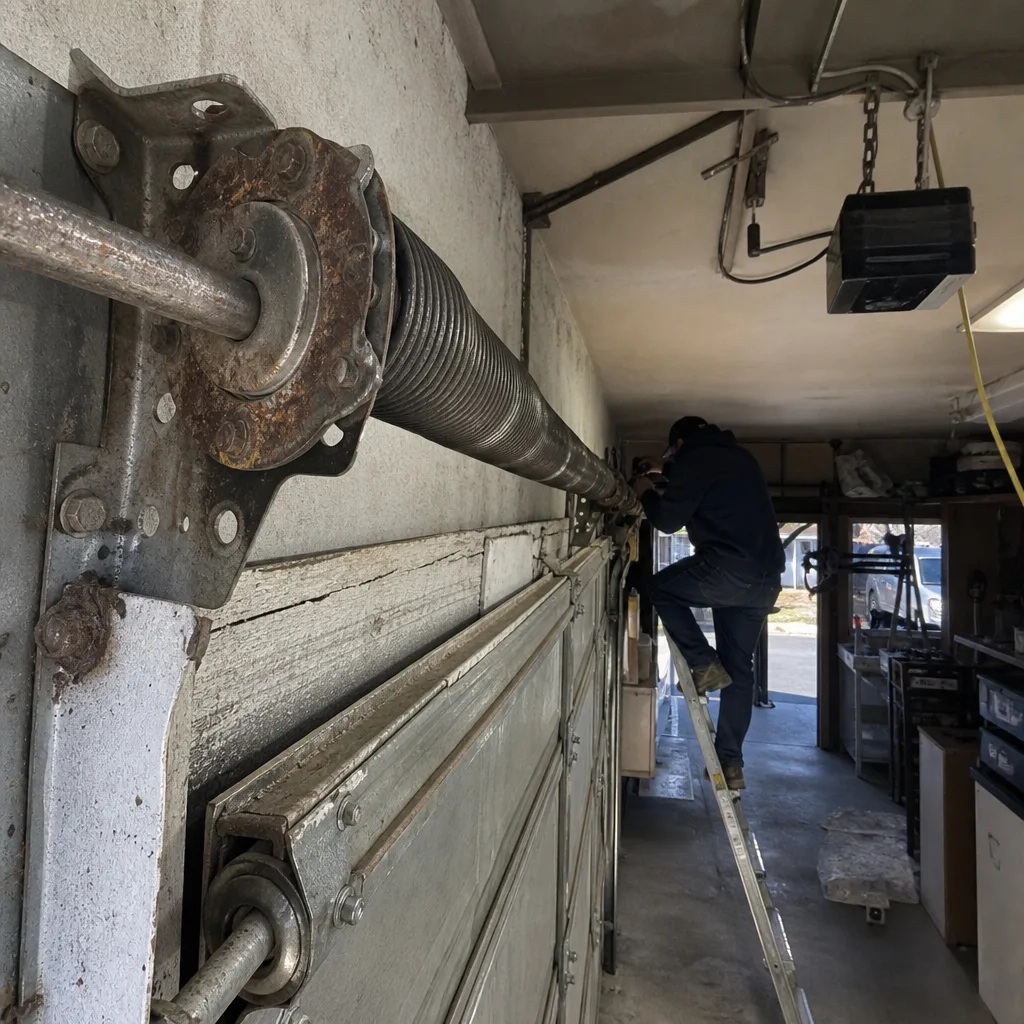 Before
 After
AfterThe Complete Guide to Garage Door in Anaheim
Here’s something most Anaheim homeowners don’t realize until a spring snaps at 7 a.m. on a Tuesday: your garage door isn’t one machine. It’s seven separate systems working together, and each one fails on its own schedule, for its own reasons, and at its own price point. The average Anaheim homeowner calls a garage door company without knowing whether the problem is a torsion spring or an extension spring, a bent track or a failed logic board. Two different failure modes, two different price ranges, two different safety profiles. That gap is exactly where overcharging starts. This guide closes that gap. You’ll learn how each component works, what it costs to fix in the Anaheim market, how long each part should last, and when replacement beats repair. For related reading, see our Garage Door Cost Breakdown: The Anaheim Homeowner’s Reference for 2026.
Quick Answer
A residential garage door in Anaheim is a system of seven interacting components: springs, cables, tracks, panels, the opener, weatherseal, and hardware. Most single-component repairs in Anaheim run between $120 and $380, while full door replacement typically runs $1,400 to $3,200 depending on size, material, and insulation. The fastest way to avoid overpaying is to identify the failed system yourself before you call anyone, and to insist on a written price before any work begins.
Table of Contents
- The Seven Systems of a Garage Door
- Anaheim-Specific Factors That Affect Your Garage Door
- How Long Each Component Should Last
- What Repairs Cost in Anaheim, by Component
- When to Repair vs. Replace
- How to Read a Written Garage Door Quote
- Maintenance That Prevents Most Breakdowns
- Common Mistakes to Avoid
- When to Call a Professional
- Frequently Asked Questions
- The Bottom Line
BeforeAfterThe Seven Systems of a Garage Door
Every residential garage door in Anaheim, whether it’s a 16-foot double door on a stucco-clad house in the Colony or a single door on a 1950s ranch near Pearson Park, depends on the same seven systems. When something goes wrong, the first question isn’t “What’s broken?” It’s “Which system failed?” The answer determines the repair cost and whether you should attempt any diagnosis yourself.
1. The Springs: The Muscle
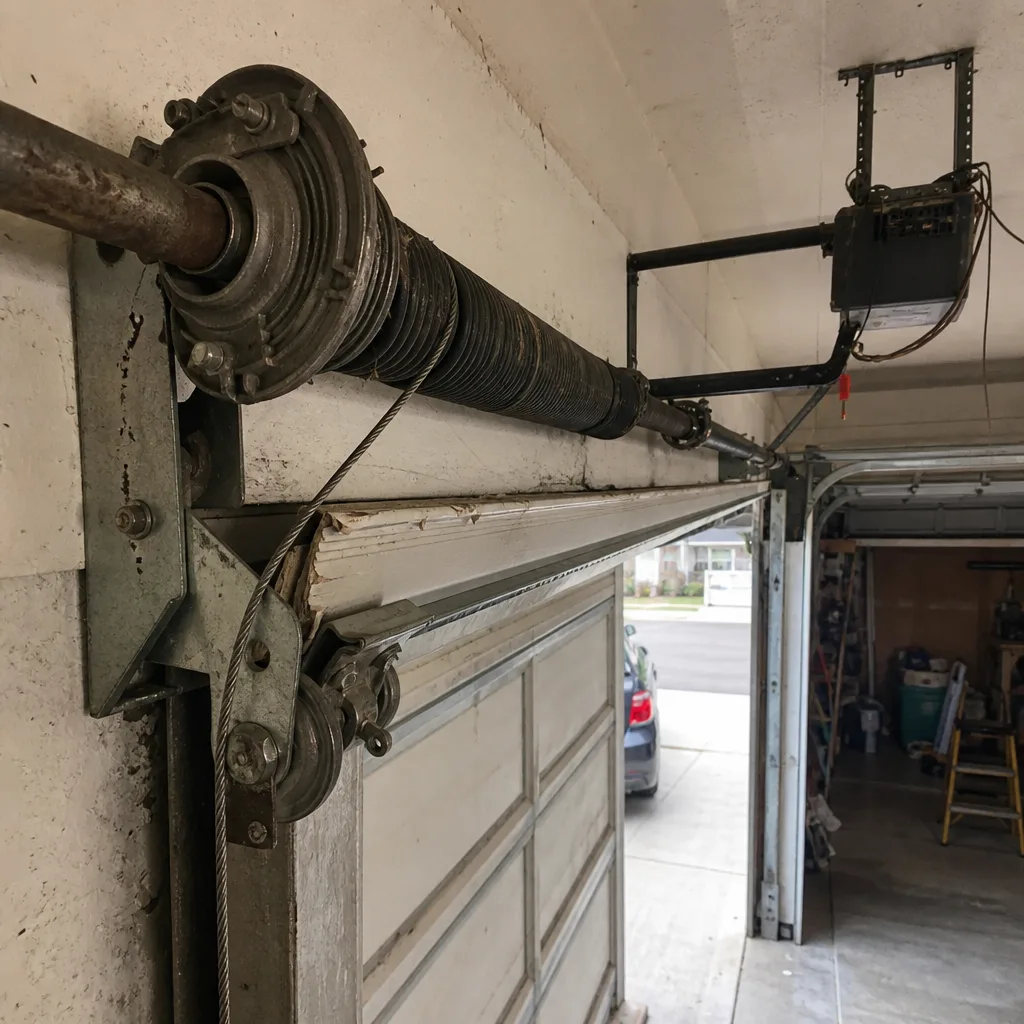
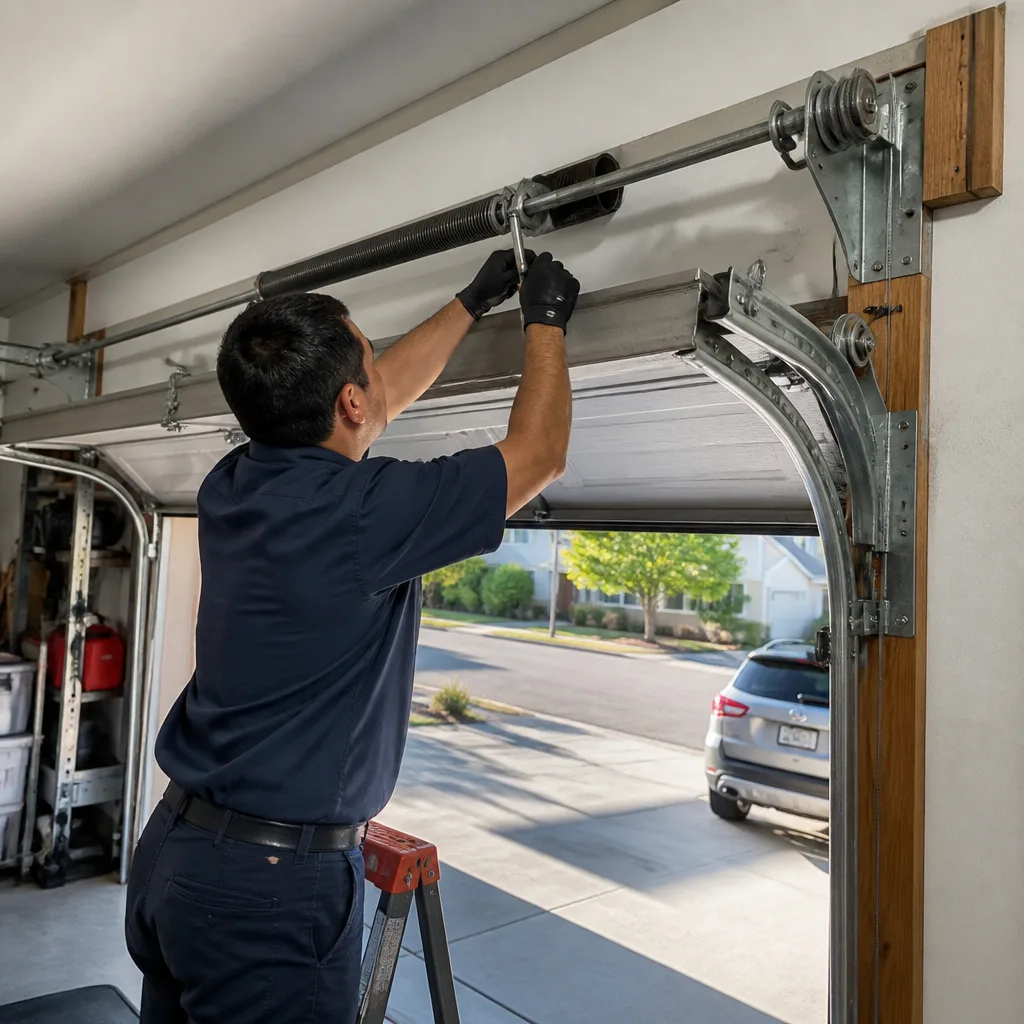
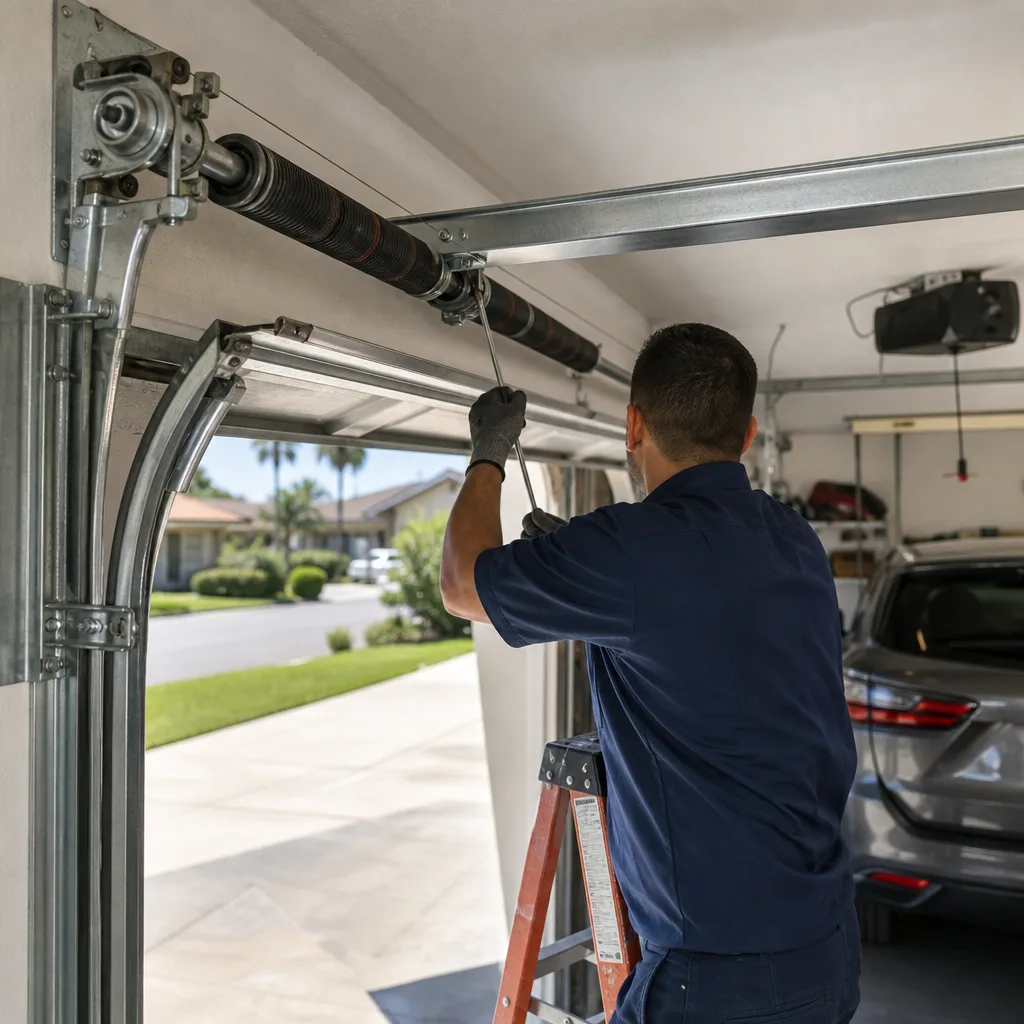
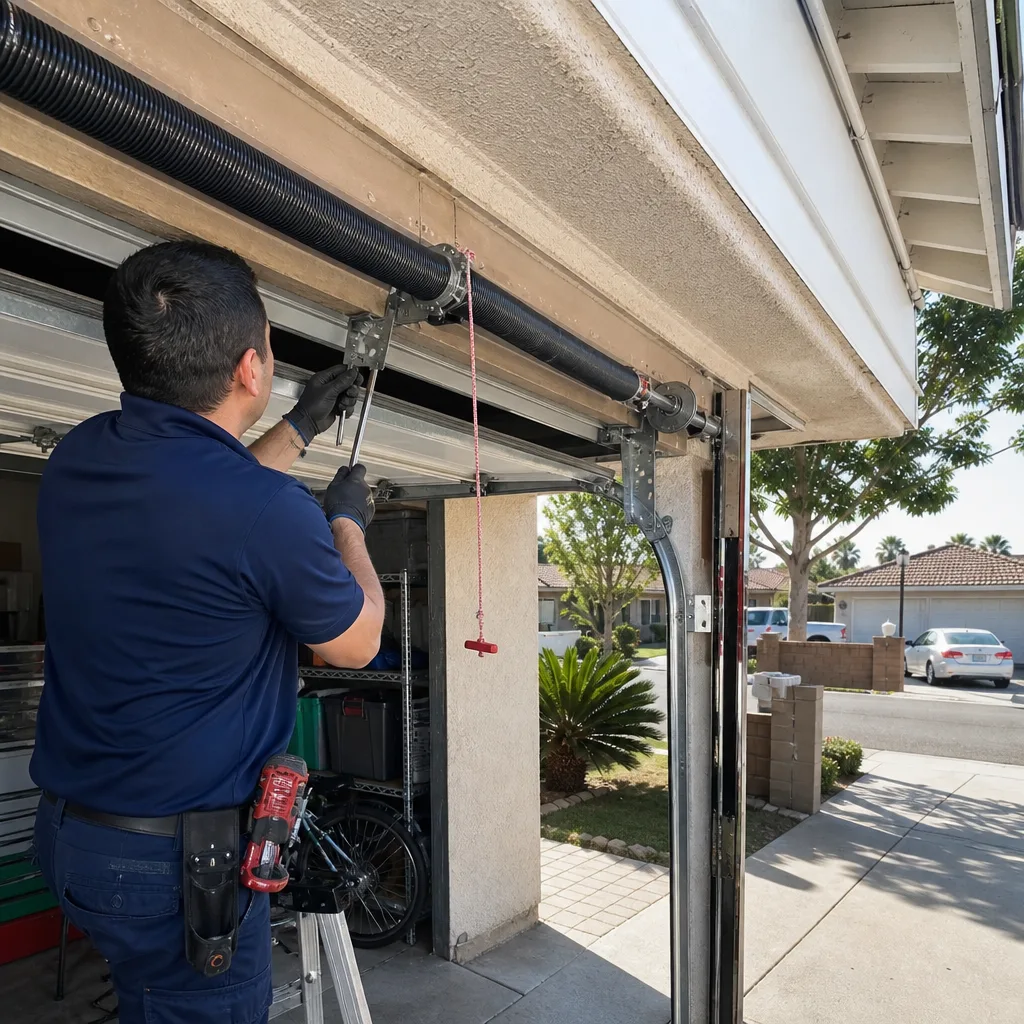
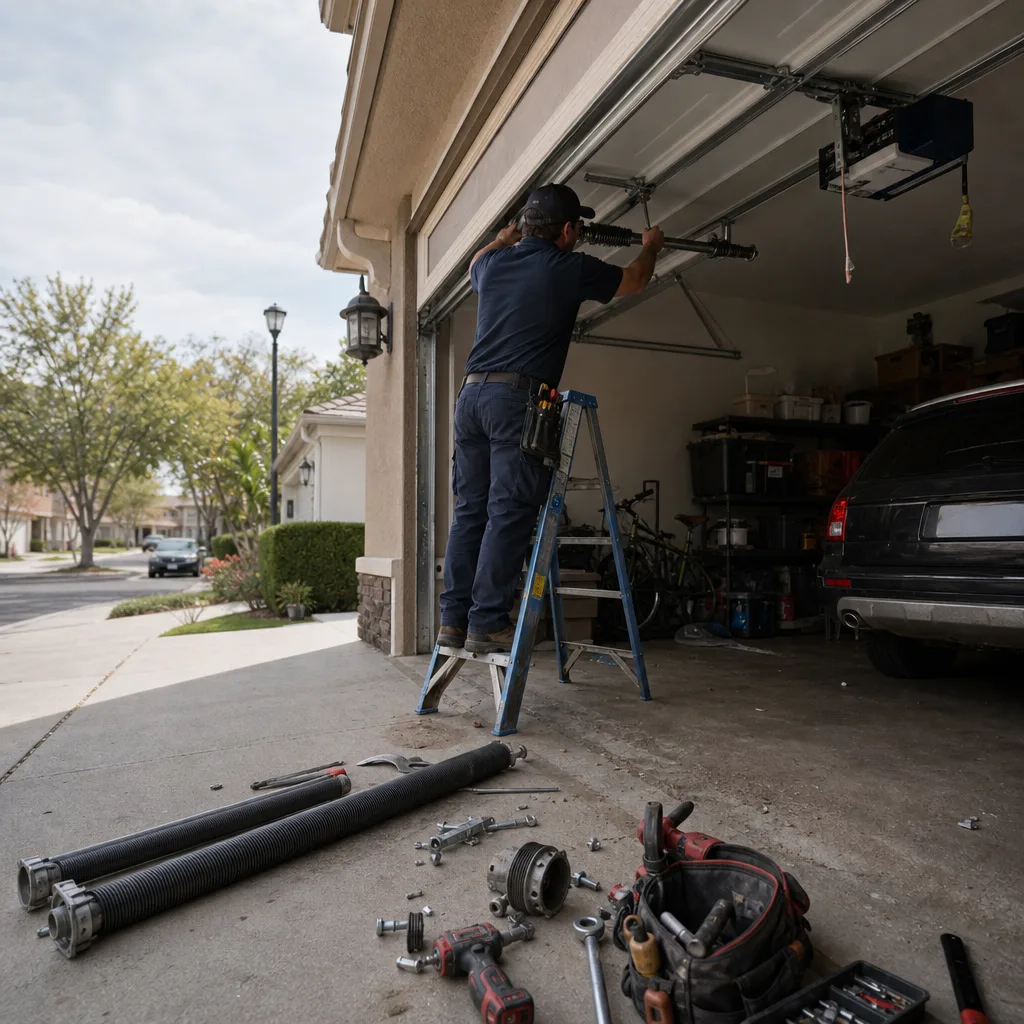
Garage door springs do the actual lifting. There are two types: torsion springs, which mount horizontally above the door opening and wind and unwind to store torque, and extension springs, which stretch along the horizontal tracks on either side. Torsion springs are the modern standard on doors installed after about 2000 and are rated for 10,000 cycles, which is roughly 7 to 10 years of normal use in Anaheim. Extension springs are older technology and still found on many pre-1990 Anaheim homes, particularly in neighborhoods like the West Anaheim tract developments from the 1960s. When a torsion spring breaks, you’ll hear it: a loud bang like a firecracker inside the garage. When an extension spring breaks, the door typically drops unevenly on one side or refuses to open. The springs are under hundreds of pounds of tension, and a failure here is not a good candidate for DIY work. The Garage Door Repair in Anaheim work we do almost always starts with a spring measurement, because spring wire diameter determines whether the door balances correctly.
2. The Cables: The Safety Net
High-tension steel cables run along both sides of the door and connect to the bottom brackets. Their job is to transfer the spring’s force to the door and to catch the section of door if a spring breaks. When springs are serviced or inspected, cables are checked at the same time, because a frayed cable under load is a serious hazard. We regularly see cable issues in Anaheim in homes near the 91 freeway corridor, where vibration from passing traffic can accelerate wear on already aging systems. A cable that shows visible fraying, kinking, or rust staining at the drum needs attention before it fails mid-cycle. Because cables ride under high tension, the safe practice is to have a trained professional handle any cable repair or replacement.
3. The Tracks: The Guide Rail System
Vertical and horizontal tracks, usually galvanized steel, guide the rollers and keep the door aligned as it moves through its arc. Tracks are surprisingly easy to knock out of alignment: a bike hitting the vertical rail, a car bumper nudging the weatherstrip, or simple thermal expansion and contraction during Anaheim’s hot summer days. A misaligned track produces a telltale grinding or scraping sound near the edges of the door. The repair is often as simple as realigning and re-torquing the track bolts, but if the track is bent or the mounting brackets have pulled away from the wall, it’s a different job that requires removing and resetting the section. Homeowners can loosen and retighten track bolts, but bent tracks should be left to a pro.
4. The Panels: The Structure
Panels are the sections that make up the face of the door. On a standard seven-foot-high door, that’s typically four panels. On most suburban Anaheim homes, these panels are steel, either 25-gauge or 26-gauge, often with a wood-grain embossed pattern. Panel damage is almost always impact-related: a car bump, a basketball, a grocery cart from a neighbor’s teenage driver. A dented lower panel is structurally weak, and on a door with a strut attached, a damaged panel can throw the entire door out of square. Panel replacement isn’t always the answer if the door is 15 years old and the replacement panel won’t match the existing finish. More on that in the repair-versus-replace section below.
5. The Opener: The Motor and Brain
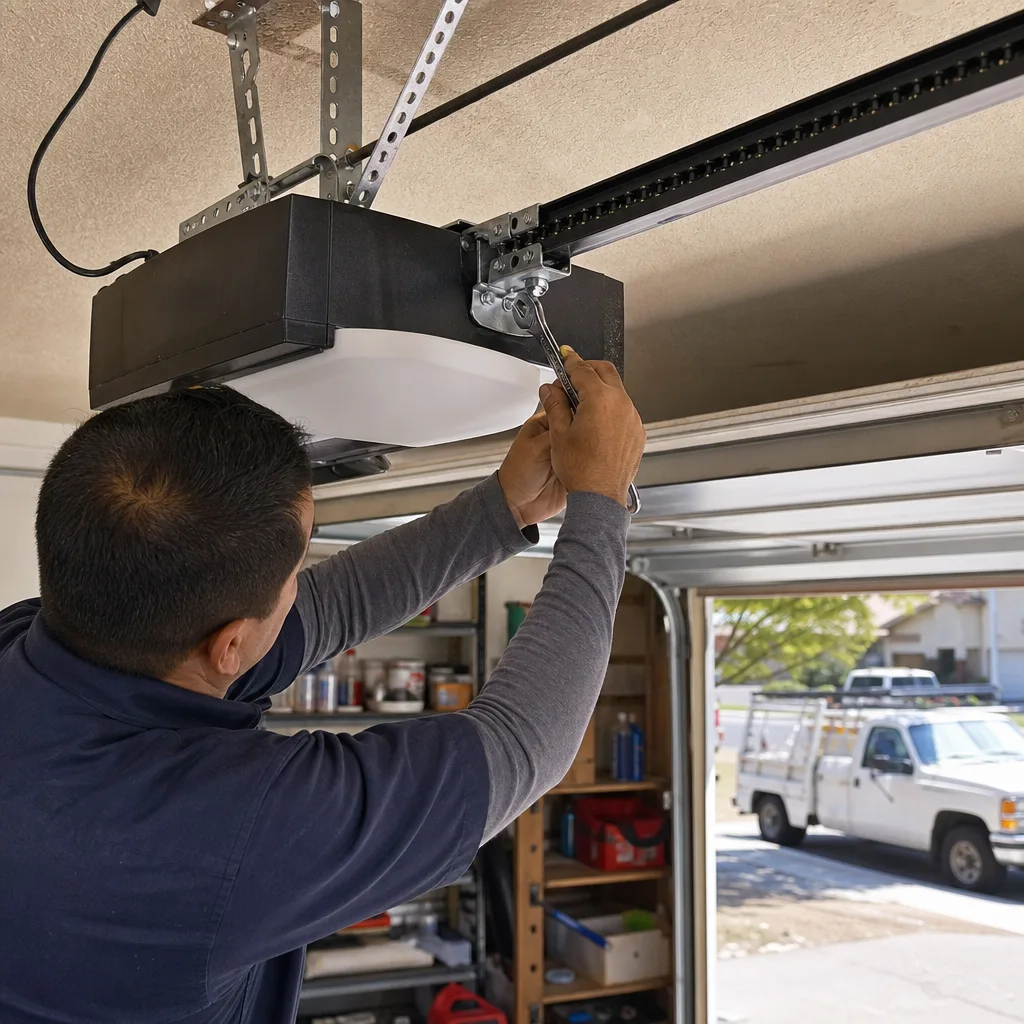
The opener is the electric motor assembly mounted to the ceiling that drives the door along the track via a belt, chain, or screw drive. The “brain” is the logic board, which interprets signals from your wall button, keypad, and remote controls. Openers are typically the shortest-lived component on the door, and opener problems are often electrical, not mechanical: a failed capacitor, a burned-out limit switch that tells the motor when to stop, or a logic board fried by an Garage Door Opener Repair & Installation in Anaheim power surge, which is a real concern in the Santa Ana wind season. LiftMaster and Genie dominate the Anaheim market, with Chamberlain a close third on the value end. A new opener with installation in Anaheim typically runs $350 to $650, depending on motor type and features.
6. The Weatherseal: The Barrier
The bottom weatherseal is the vinyl or rubber strip that runs along the floor edge of the door. It blocks water, dust, leaves, and the occasional field mouse. In Anaheim’s dry season, which is most of the year, the seal also blocks the fine dust that blows in from the Santa Ana winds and from the 57 and 91 freeway corridors. Weatherseal replacement is the single most overlooked maintenance item on a garage door. A DIY-friendly replacement strip costs $15 to $40 at any hardware store and takes about an hour to install if the old seal slides out cleanly. If the aluminum retainer that holds the seal is dented, which happens frequently along the garage floor’s edge, that retainer needs to be replaced too.
7. The Hardware: The Joints
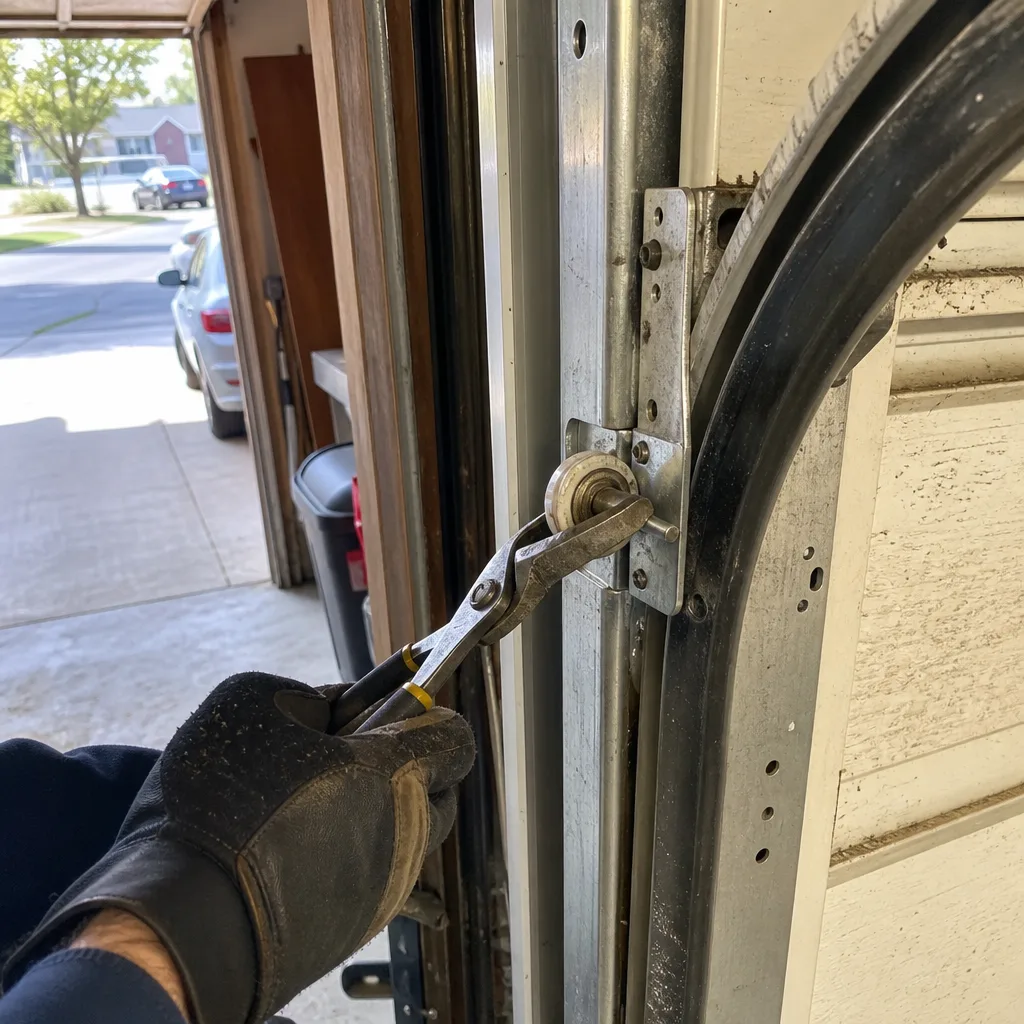
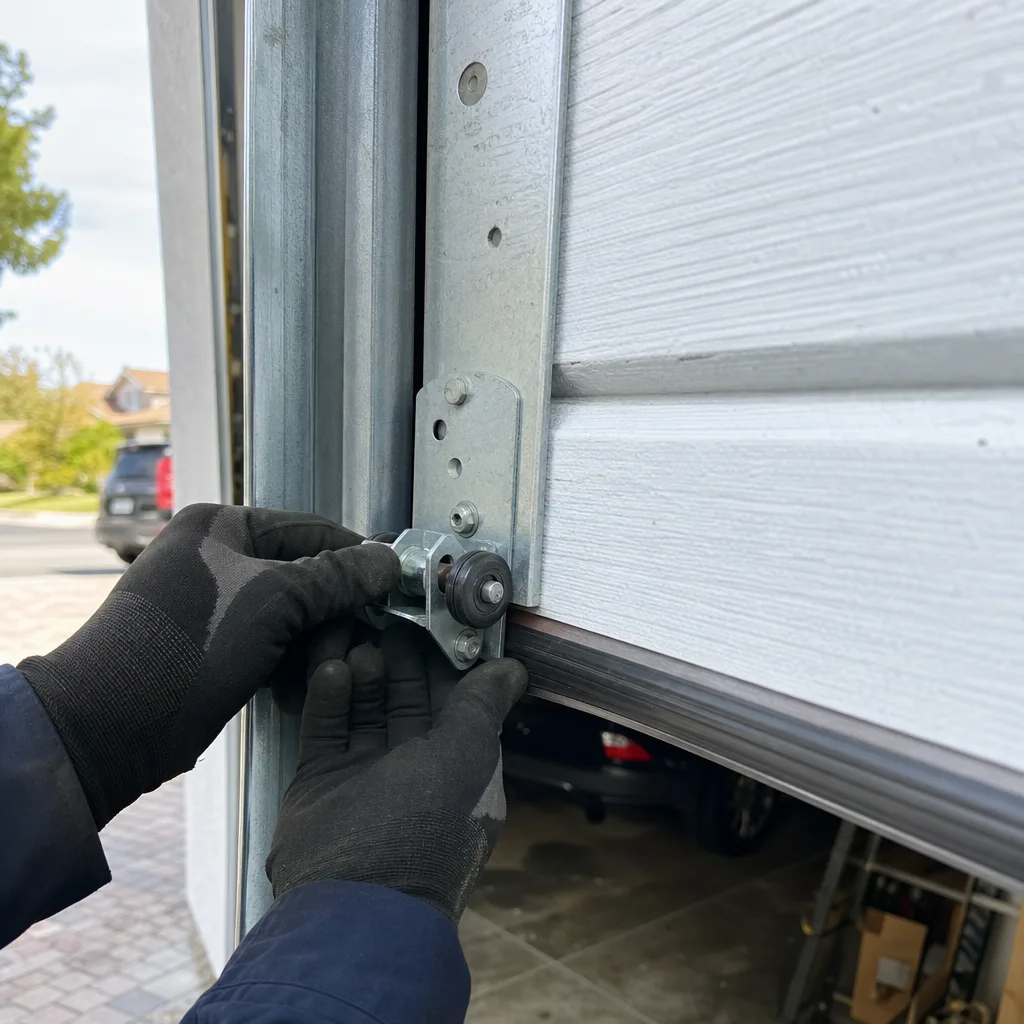
Hinges, rollers, brackets, and fasteners hold the seven systems together. Rollers deserve special attention in Anaheim because the climate’s dust and temperature swings accelerate roller wear. The standard steel roller with a ball bearing lasts about five to seven years. Nylon rollers with sealed bearings last twice as long and run quieter, which matters when the garage is attached and someone sleeps above it. A worn roller shows flat spots or wobble, and it transfers vibration to the entire door. Hardware replacement is one of the least expensive and most cost-effective upgrades you can make to an older door.
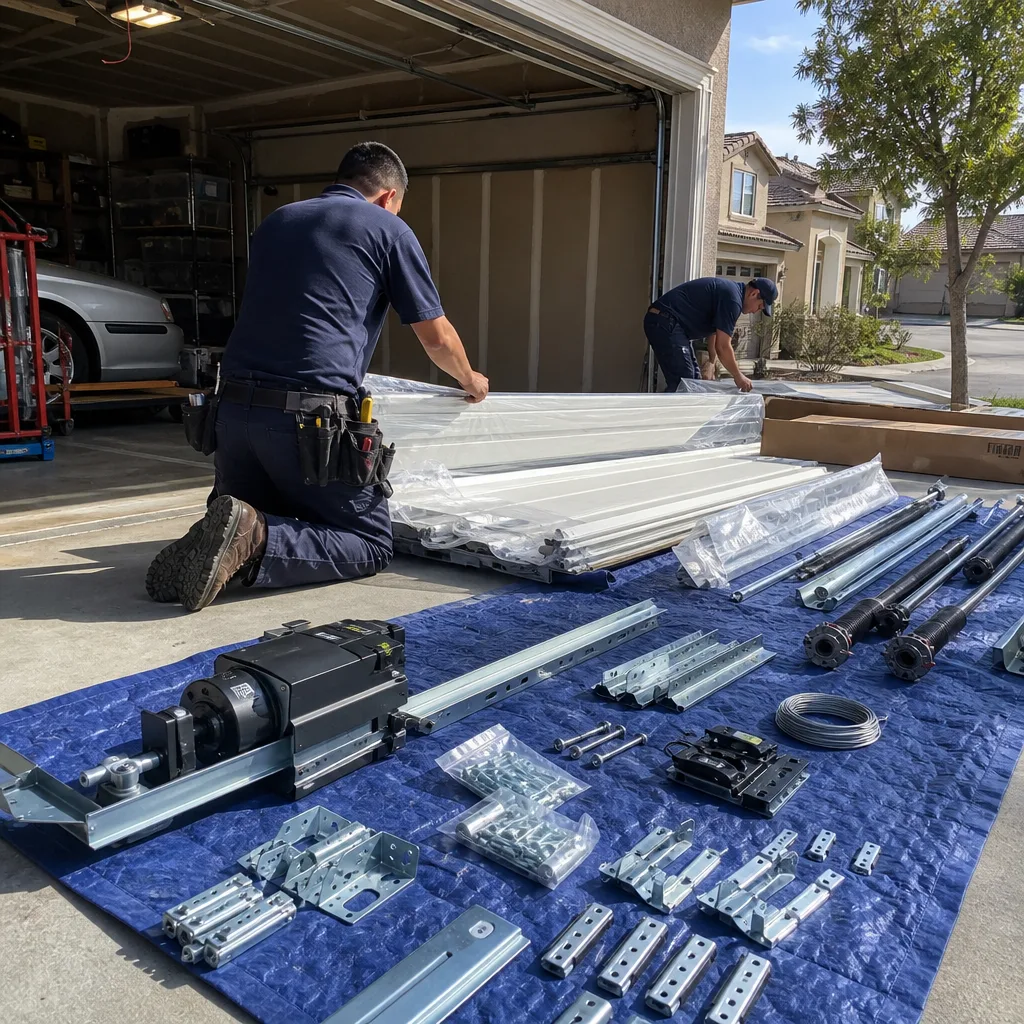
Each of these seven systems is a separate decision point. When a technician starts naming parts, you’ll know which system is being discussed and whether the quote makes sense. That’s the foundation the rest of this guide builds on.
Anaheim-Specific Factors That Affect Your Garage Door
Garage doors fail differently in Anaheim than they do in, say, Seattle or Phoenix. Here’s what the local climate, housing stock, and geography do to your seven systems.
The Stucco Factor
Anaheim’s housing stock is disproportionately stucco-clad, particularly in the 92801, 92802, 92804, 92805, 92806, and 92807 zip codes, where tract developments from the 1950s through the 1980s dominate. Stucco means thick exterior walls, which means the rough opening for the garage door is set deeper than on wood-framed homes. When a door gets replaced, the installer has to account for that deeper reveal with jamb extensions or custom trim. A door that wasn’t measured properly will leave gaps at the jambs or need shimming. If you’re getting a quote for a new door in Anaheim, the written scope should explicitly mention the jamb condition and any trim work, and you should confirm whether Garage Door Permits, Codes & Inspections in CA: What You Need to Know apply to your project. “Call for a quote” doesn’t cut it. No, the written quote should name the exact measurements on the page.
The Heat and Dust Load
Anaheim’s Mediterranean climate means hot, dry summers with weeks where temperatures stay above 85 degrees. That heat has a measurable effect on nylon and rubber components. Weatherseals harden and crack after four to five summers. Roller bearings lose lubrication faster in dry heat. Metal panels expand and contract, which over a decade can cause a door to go slightly out of square. The dust that blows in from the Santa Ana winds and from the freeway corridors settles on the tracks and rollers, creating a gritty paste with the existing lubricant. That grit accelerates roller wear and can make a track misalignment feel like a much more serious problem.
The Freeway Vibration Corridor
Homes near the 91, 57, and 5 freeway corridors experience constant low-level vibration. Over years, that vibration loosens track bolts, hinge screws, and opener mounting hardware. It’s not dramatic, but it’s cumulative. We’ve been called to homes near the 91 where the opener itself had loosened from the ceiling mounts enough to produce a clunk on every cycle. The fix was simple: re-torque the mounting bolts. The diagnosis wasn’t. Knowing to check for vibration-related loosening on freeway-adjacent homes is the kind of local knowledge that generic garage door companies don’t have.
Salt Air in the South County Border
Anaheim isn’t a coastal city, but the southern border near the 55 and the Santa Ana River carries a faint marine influence, especially during morning fog patterns in May and June. For gates and doors within about five miles of the coast, that means slightly higher rates of surface rust on steel rollers, hinges, and track hardware. A door with galvanized tracks will hold up; hardware edges may show rust staining and need replacement sooner than the same components on a home in the hills.
How Long Each Component Should Last
The dumbest reason to replace a garage door in Anaheim is because no one told you that the part that failed was built to be replaced. Here’s the real-world lifespan for each system in this market.
| Component | Typical Lifespan in Anaheim | Replacement Cost Range |
|---|---|---|
| Torsion Springs | 7-10 years (10,000 cycles) | $180-$340 per spring pair |
| Extension Springs | 5-8 years | $120-$220 per pair |
| Lift Cables | 7-10 years (inspect annually after year 5) | $130-$220 per pair |
| Steel Rollers | 5-7 years | $90-$150 for a full set |
| Nylon Rollers | 10-12 years | $120-$180 for a full set |
| Bottom Weatherseal | 3-5 years | $15-$40 DIY, $80-$120 installed |
| Garage Door Opener | 10-15 years | $350-$650 installed |
| Steel Panels | 25-30 years (if maintained) | $200-$500 per panel |
| Track System | 25-30 years (if realigned when needed) | $250-$500 installed |
Here’s how to use this table. When a technician tells you the spring has a clean break and measured 0.25-inch wire diameter, you know that’s a $180 to $340 repair and that the spring was due based on age. When a technician tells you the door needs a full replacement because the bottom panel is dented, you know that a $200 to $500 panel replacement is a valid option if the door is under 15 years old. The lifespan data is what lets you self-triage before anyone arrives.
What Repairs Cost in Anaheim, by Component
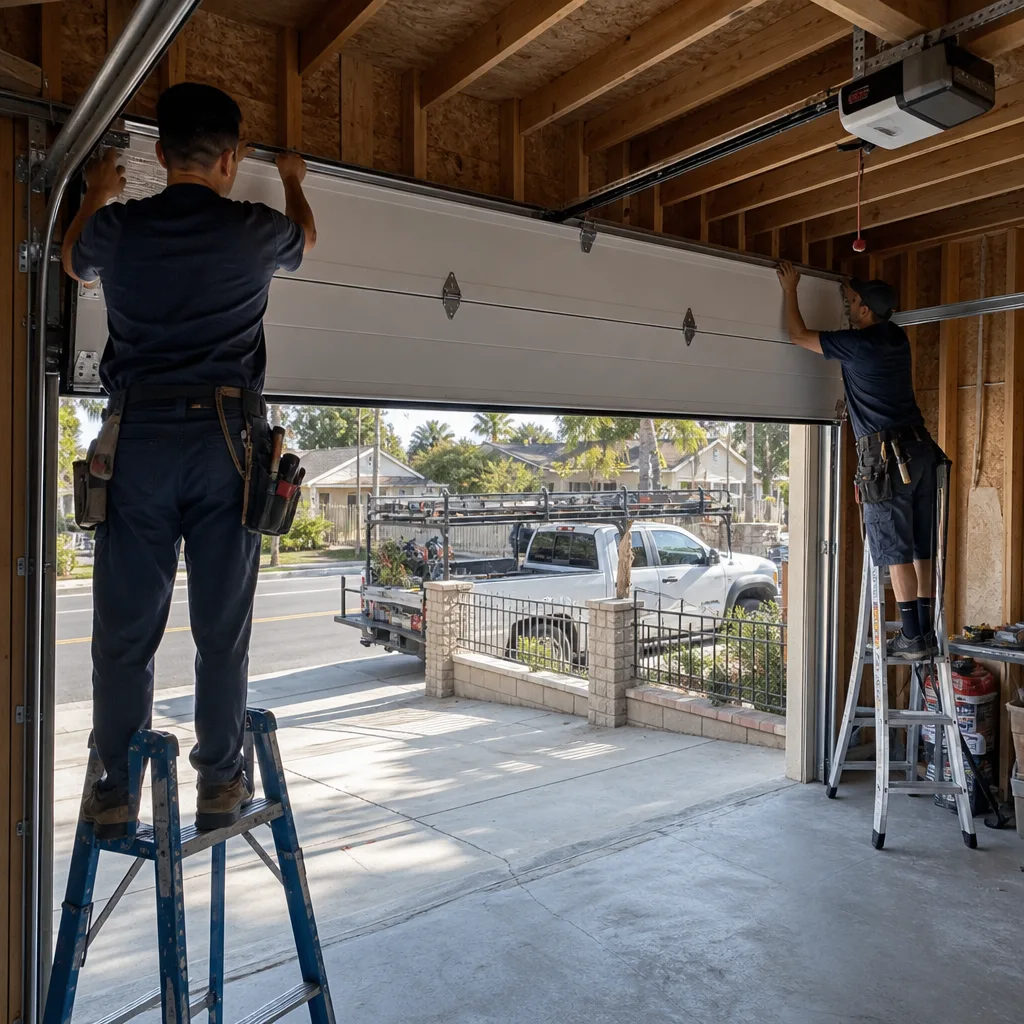
Here’s the pricing detail that most garage door guides don’t give you: line items. In Anaheim, the market for garage door work has a wide range, and the spread is mostly explained by two things: whether the company does written-price-before-work or keeps the price verbal until the end, and whether the tech is doing component replacement or recommending a door replacement for the same issue. Here’s what each repair should cost in the Anaheim market as of 2025.
Spring Replacement
Torsion spring replacement on a standard two-car garage door in Anaheim runs $180 to $340 for the pair. Extension springs are cheaper, typically $120 to $220 per pair. The labor is the same regardless of spring size, but the material cost changes with spring wire diameter. A 0.207-inch wire spring on a light door costs less than a 0.273-inch spring on a heavy wood or insulated steel door. The price should be quoted as a flat number before the work starts, not as an estimate that “may go up once we get in there.” We quote a flat number and a written scope. Clause 1 of The Haven Standard is written price before any work starts, on every job, no exceptions.
Cable Replacement
Cable replacement in Anaheim runs $130 to $220 per pair, including parts and labor. The cables are low-cost items, but the labor is the same as spring work because the spring tension has to be released to replace the cables safely. If a technician quotes cable replacement without mentioning the spring condition, that’s a red flag: a cable break is often the symptom of a spring problem, not the root cause.
Roller Replacement
Replacing a full set of 10 to 12 rollers on a standard door runs $90 to $180. Nylon rollers with sealed bearings run about 25 to 30 percent more than basic steel. If your garage is under a bedroom, spend the extra $30 to $50 for nylon, and the noise reduction is immediate and real. The bottom bracket rollers are different from the intermediate ones, and a good technician will check the brackets for wear while the door is apart. A worn bottom bracket, which is a cast metal piece, is an $80 to $140 replacement and important for door safety, since it’s the attachment point for the cable.
Opener Repair vs. Replacement
Opener repairs in Anaheim break down into three buckets. A simple fix, like a limit switch adjustment or a gear replacement on a LiftMaster or Genie unit, runs $90 to $180. A more involved fix, like a failed logic board or a stripped trolley carriage on an older Chamberlain, runs $180 to $280. A full opener replacement with a new belt-drive unit runs $350 to $650 installed. When a logic board fails on a 12-year-old opener, replacement is almost always the right call, and the math is clear on the quote.
Track Realignment or Replacement
Track realignment, which involves loosening the brackets, setting the track spacing, and re-torquing, runs $120 to $180. If the track is bent from a car or a heavy impact, a replacement section runs $250 to $500. We’ve seen track misalignment on Anaheim homes near the 91 where every single bolt had walked loose from years of vibration. A simple re-torque fixed it. A replacement wasn’t needed.
Panel Replacement
A single steel panel replacement runs $200 to $500 depending on the door model and the panel insulation factor. The complication is finish matching: a panel ordered today for a door installed in 2018 may not match exactly because the original finish has faded in the sun. Most manufacturers do a good job with color matching, but there’s no guarantee of an invisible seam. If the door is under 12 years old and the panel is a lower section, replacement makes sense. If the door is 15-plus years old, it’s a steeper calculation, and we’ll spell it out in the written quote.
Weatherseal Replacement
A bottom seal replacement is $80 to $120 installed, or $15 to $40 DIY. If the aluminum retainer that holds the seal is bent, which happens when the seal catches on the concrete lip at the garage opening, the retainer replacement is $100 to $160. This is a simple job and a good one to do yourself if the retainer is sound.
When to Repair vs. Replace
This is the question that separates a $300 fix from a $2,500 replacement, and the answer depends on three variables: the age of the door, the condition of the panel, and the cost of the required repair relative to the cost of a new door. Here’s the decision framework we use.
- Under 10 years old: Almost always repair. The panels are still available from the manufacturer, the finish is current, and the springs and opener may have years of life left. A $300 spring pair is the obvious call.
- 10 to 18 years old: Repair if the problem is a spring, cable, roller, or weatherseal and the panels are straight. Replace if the panel is damaged and the replacement panel won’t match, or if you need to replace two or more panels, which is rare and usually means the door is structurally compromised.
- Over 18 years old: Evaluate honestly. The door has lived through 18 Anaheim summers and the panel insulation has degraded. A new door with polyurethane insulation will be quieter and better sealed. The cost difference between a major repair and a new mid-grade door is often only a few hundred dollars.
One thing to be clear about: the person giving you the recommendation should not be the same person who benefits financially from the more expensive option. That’s a conflict of interest. The way to neutralize it is to ask for a written quote that shows the repair cost and the replacement cost side by side. If the company won’t put both numbers on paper, find one that will. Servo Garage Doors Anaheim provides a written side-by-side comparison on request, because the Garage Door Installation in Anaheim decision should be made with the numbers in front of you.
How to Read a Written Garage Door Quote
You can tell more from a written quote than from a company’s website or their Google reviews. Here’s what to look for, line by line.
What a Good Quote Includes
- A per-line-item price. Not “spring replacement: $250-$350,” but “pair of torsion springs, 0.225 wire, installed: $285.” Flat, specific, no range.
- A written scope of work. This is a description of what the technician will do, written before the work starts. “Remove old spring pair. Install matching pair per door weight. Set balance. Test 3 cycles. Photograph work.” That’s a scope.
- Warranty terms. How long the parts and labor are covered, and what’s included. It should be written on the quote, not spoken.
- Brand names and model numbers. “LiftMaster spring pair” is not enough. The wire diameter and the brand is enough, but the actual spring part number is better. You want to be able to verify what was installed.
- A photo record. We photograph the failed component before replacement and the completed work after. That record is included with every job. It’s our founding rule, codified as Clause 4 of The Haven Standard: the customer sees the failed part before anyone quotes a replacement. If a company won’t show you the failed part, walk.
Red Flags in a Quote
- “Labor” as a single line item with no breakdown. That’s where padding hides.
- A quote that “can’t be finalized until the work begins.” That’s a verbal estimate dressed up as a quote. A real quote is flat and written.
- Pressure to sign today. In a functioning market, a written quote is good for a reasonable window. Anyone who needs a decision in the next hour is selling urgency, not craftsmanship.
- A door replacement recommendation without a repair price. If the quote only shows the replacement and doesn’t tell you what the repair would cost, you’re not getting a comparison. You’re getting a pitch.
- A tech who won’t show you the old part. You should see the broken spring, the frayed cable, the bent track. It’s your door and your money.
We built Servo Garage Doors Anaheim around the idea that documentation replaces trust. The written price, the written scope, the photo record: none of it requires you to believe us. The paper trail speaks for itself. That’s the whole point of Clauses 1 and 4.
Maintenance That Prevents Most Breakdowns
Most garage door breakdowns in Anaheim are preventable with 20 minutes of maintenance three times a year. For more guides & resources on keeping your door running, visit our blog. Here’s the checklist we hand to homeowners, and it holds up when the heat and dust load is as high as it is here.
- Lubricate the moving parts. Use a white lithium or silicone spray on the rollers, hinges, and bearing plates every four to six months. Do not lubricate nylon rollers; only steel. In Anaheim’s dry heat, the spray dries out faster than in coastal climates, so this needs to be more frequent here.
- Test the auto-reverse. Place a 2×4 on the floor under the door and close it. The door should reverse when it hits the wood. Test the photo-eye sensors by closing the door and passing your hand through the beam; the door should reverse immediately. If it doesn’t, call a professional. This is a safety device, not a convenience feature.
- Inspect the cables and springs. Look for fraying on the cables and rust staining at the drums. If either is present, call a professional before the cable fails under load.
- Check the balance. Pull the manual release cord and lift the door to waist height. A properly balanced door stays put. If it drops or requires real effort to move, the springs are worn and need attention.
- Clean the tracks. Wipe down the vertical and horizontal tracks with a rag and check for debris or built-up dust. Do not lubricate the tracks. The rollers ride on bearings, and grease on the track attracts the exact dust we’re trying to keep out.
- Check the hardware for looseness. Go over the bolts and screws on the hinges, brackets, and opener mounts with a wrench. If you live near the 91, 57, or 5, do this more frequently: the vibration works hardware loose faster here.
This is not a substitute for a professional inspection, but it is the difference between a spring that fails on schedule and one that fails early because no one checked the balance for five years. Most of what we repair in Anaheim could have been caught earlier with a 10-minute visual check.
Common Mistakes to Avoid
- Calling without knowing which system failed. If you can say “the door makes a grinding sound near the top right track” instead of “it’s broken,” you’ll save money because the technician will start at the right place. You’ve now read what each system does; use that vocabulary.
- Accepting a verbal estimate. In Anaheim, a verbal estimate has no documentation and no accountability. A written quote with a flat price is the only kind that matters. Don’t accept anything less.
- Replacing the door when only a panel is damaged. If your door is under 12 years old and the damage is isolated to one panel, a $200 to $500 panel replacement is often the better call. A $2,500 door replacement is not always the “upgrade” it’s framed as.
- Skipping the auto-reverse test. The auto-reverse and photo-eye test takes 30 seconds. Failing to do it means you might not discover the safety system is compromised until someone gets hurt. Test it monthly.
- Lubricating the tracks. Grease on the tracks collects the dust and grit that blows in from the Santa Ana winds and turns it into a grinding paste. Lubricate the rollers and hinges, not the track itself.
- Choosing speed over documentation. A company that promises to be there in an hour but won’t produce a written scope or a photo record is not offering speed; they’re offering to skip the accountability. You can have both: we answer calls in Anaheim 24 hours a day with a live person, and we still produce the written price and the photo record on every single job.
- Hiring a company that won’t name the brand and model of the parts they’re installing. If the quote says “springs” and not “0.225-inch wire torsion spring pair, brand X,” you don’t actually know what you’re buying. Specificity is the whole game.
When to Call a Professional
Here’s the line: you should call a professional for any work involving the springs, the cables, or the opener’s electrical components. Springs and cables are under high tension and can cause serious injury if mishandled during a release; this is not a place for trial and error. Track realignment and weatherseal replacement are on the simpler end and can be done by a careful homeowner with basic tools. If you’re uncertain, don’t gamble. A professional diagnosis in Anaheim costs less than the medical bill from a spring flying off the torsion bar. Servo Garage Doors Anaheim offers free estimates in Anaheim, call (949) 822-8002, and we’ll send a technician who will name the failed component, photograph it, and put a flat written price in front of you before any work begins.
Frequently Asked Questions
Spring replacement in Anaheim typically runs $180 to $340 for a pair of torsion springs and $120 to $220 for extension springs, including parts and labor. The exact price depends on the spring wire diameter, which is matched to your door’s weight and size. Call (949) 822-8002 for a flat written price based on your specific door.
Yes, for most repairs, including spring breaks, cable failures, and opener issues, we can often have a technician in Anaheim the same day. Emergency calls are answered by a live person 24/7, and we’ll give you a named technician and an on-the-way text, not a four-hour window.
No. The written price is the price. We quote a flat number before any work starts, and the scope is written in the same document. If we find something unexpected during the job, we stop and discuss it with you before proceeding. That’s Clause 1 of The Haven Standard.
Yes. Our service vehicles in Anaheim carry the most common spring sizes, cable sets, rollers, and hardware. For specialized parts on less common door models from brands like Raynor or Wayne Dalton, we source the part and schedule the return visit with the written price set before we leave.
A garage door opener in Anaheim typically lasts 10 to 15 years, depending on the brand, motor type, and usage frequency. LiftMaster units tend to last toward the upper end of that range in our experience, while older Chamberlain models with chain drives last 10 to 12 years. Power surges and heat exposure can shorten that, which matters given Anaheim’s summer temperatures.
Repair the door if it’s under 10 years old and the problem is confined to a spring, cable, roller, or weatherseal. Consider replacement if the door is over 18 years old, the panels are structurally compromised, or multiple systems have aged out at once. The decision should be made with a written side-by-side comparison of repair and replacement costs, which Servo Garage Doors Anaheim home provides at no charge.
The Bottom Line
Your garage door is seven separate systems, and every one of them has a name, a lifespan, and a price range. Knowing which system failed is half the battle. The other half is working with a company that documents what it found, what it recommends, and what it will charge, in writing, before any tool comes out. That’s not a “nice to have.” It’s the difference between paying for a spring and paying for a door you didn’t need. Servo Garage Doors Anaheim has operated since 2015 as an independently owned and operated business under The Haven Standard, serving Anaheim with written-price-first service, photo documentation on every job, and a 365-Day Done Right Promise. If you know which system is acting up, or even if you just know the door isn’t right, call (949) 822-8002 and we’ll name the part, photograph it, and put a written price in front of you before anything moves.
Written by Marcus Deller, Owner at Servo Garage Doors Anaheim, serving Anaheim since 2015.