
Last updated September 19, 2026
Full 25-point door and opener safety check with every visit - springs, cables, rollers, tracks, and your LiftMaster or Chamberlain opener included
You get a price before we start. It does not change when the truck arrives.
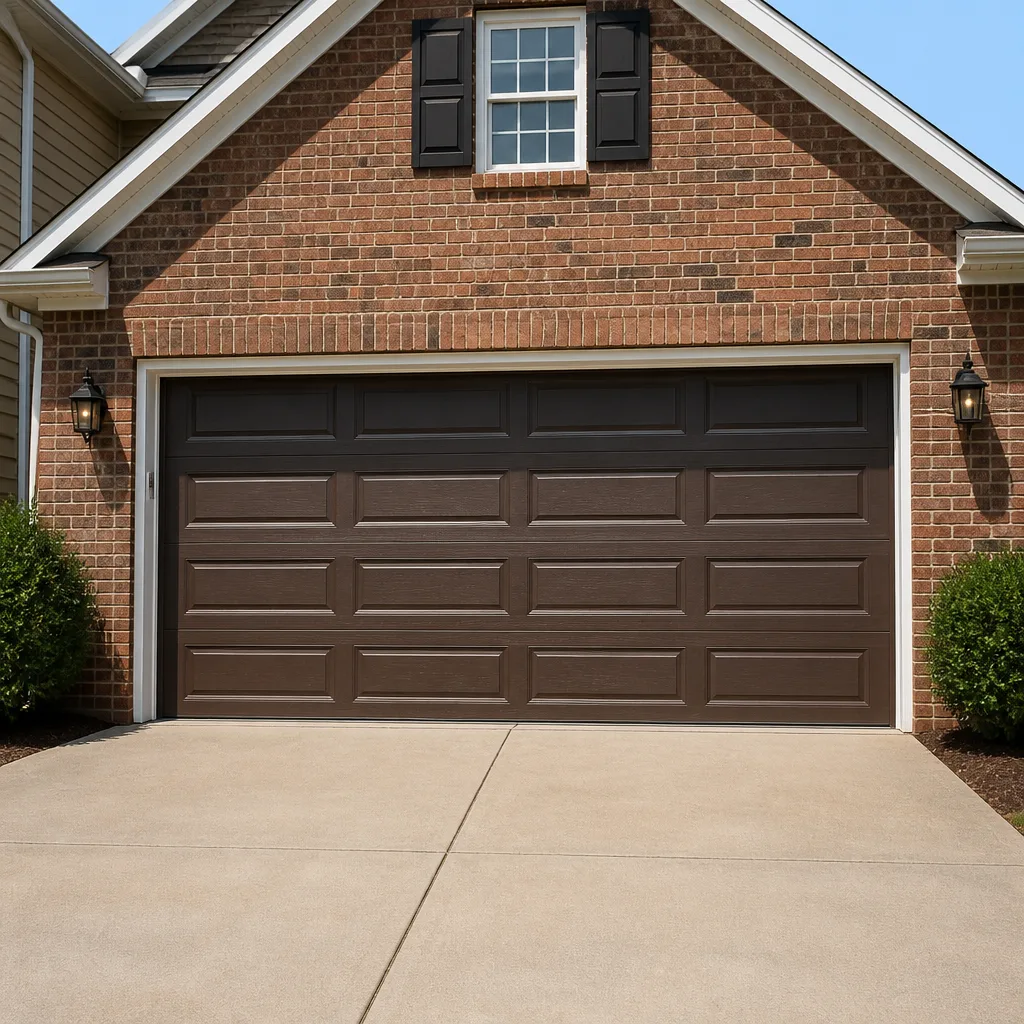
Carriage house
Full-view glass
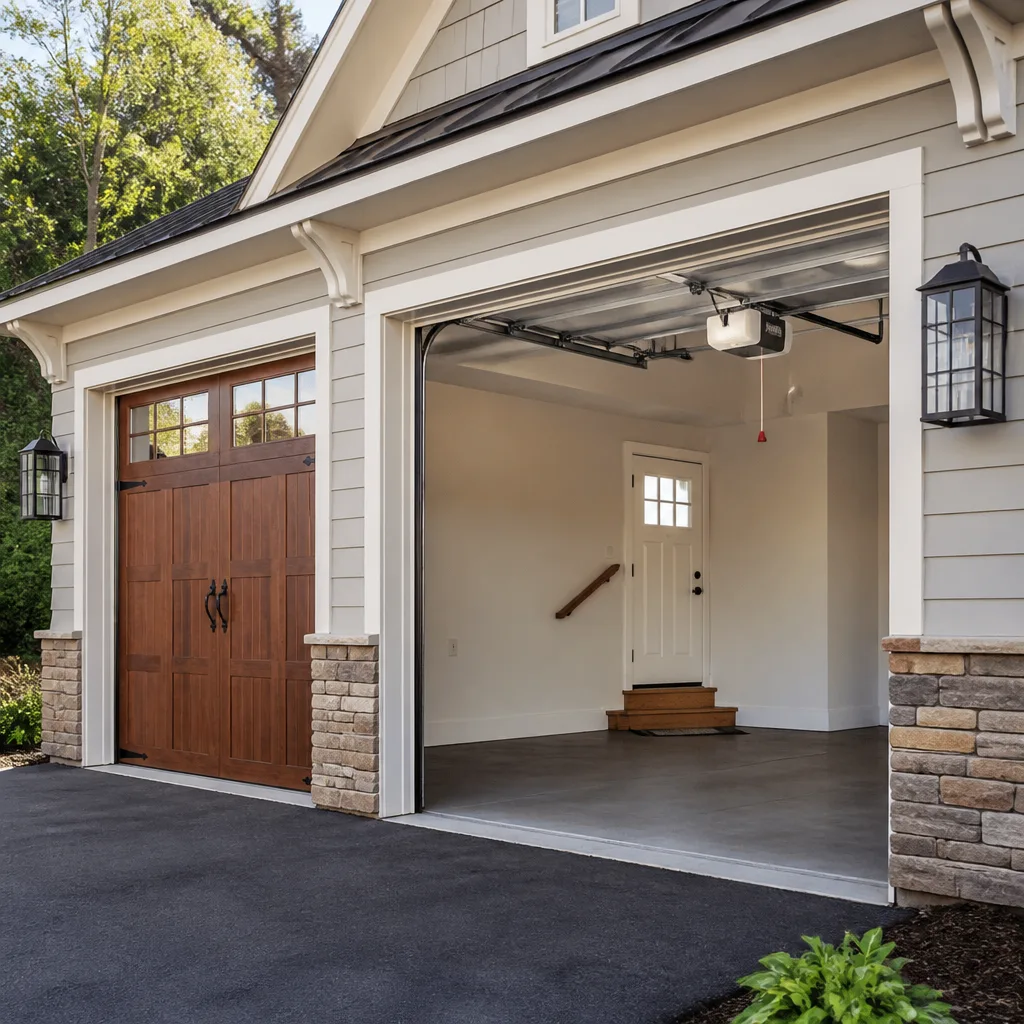
Chamberlain openers
 Before
 After
After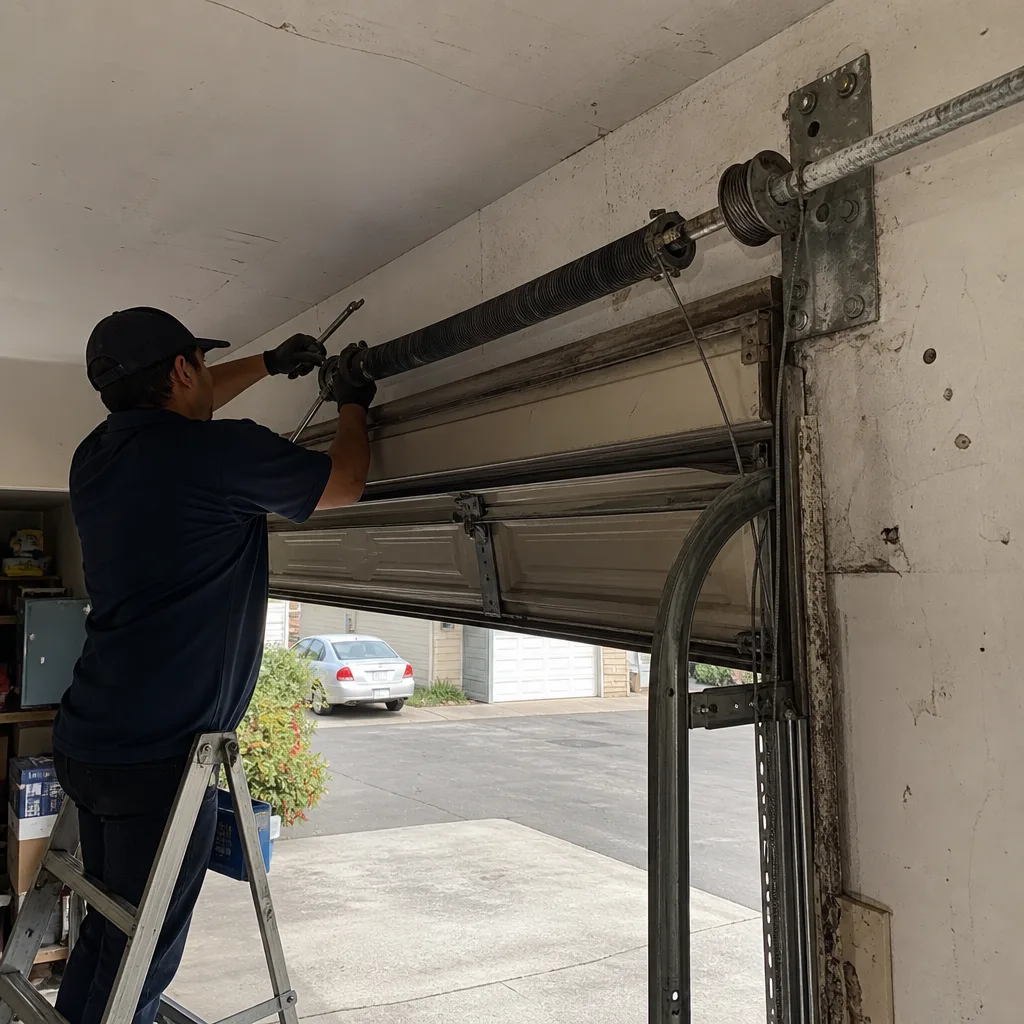 Before
 After
After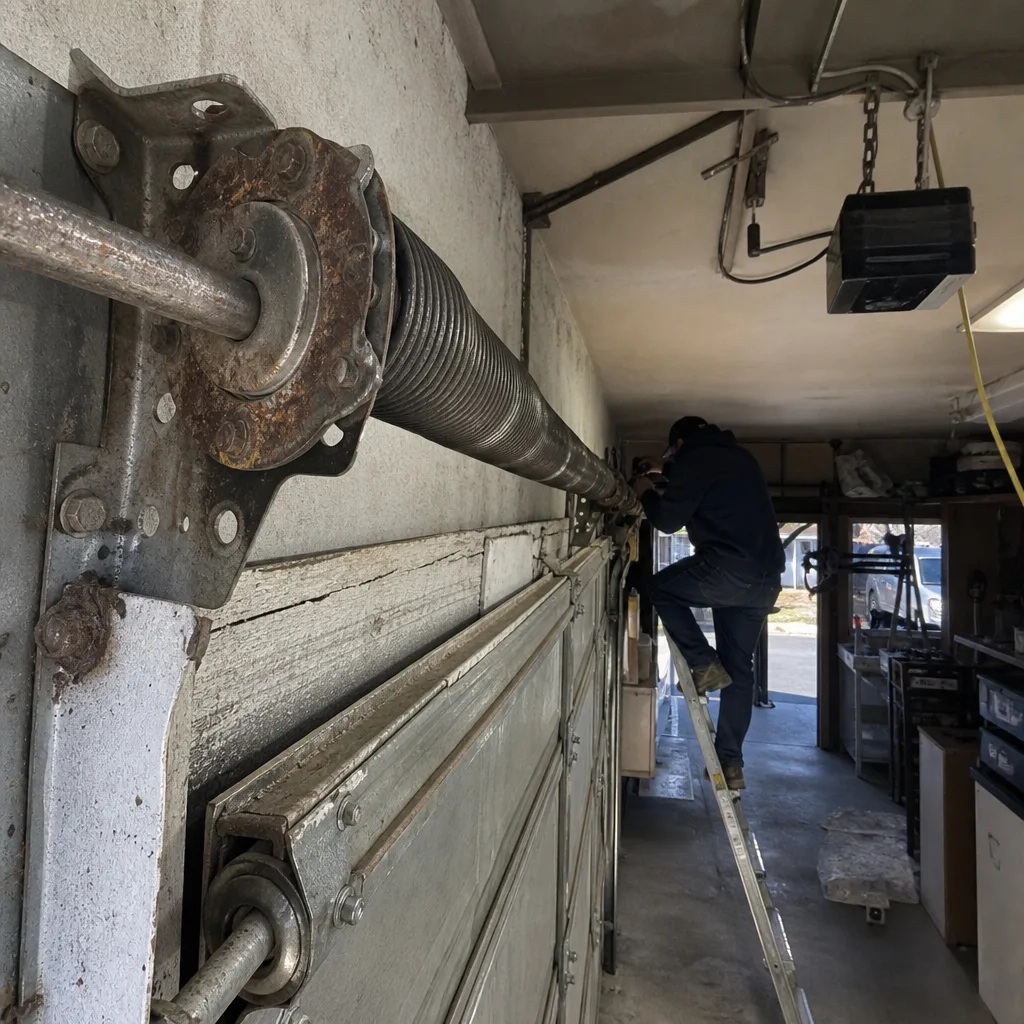 Before
 After
AfterDIY vs Professional Garage Door: The Anaheim Homeowner’s Decision Guide
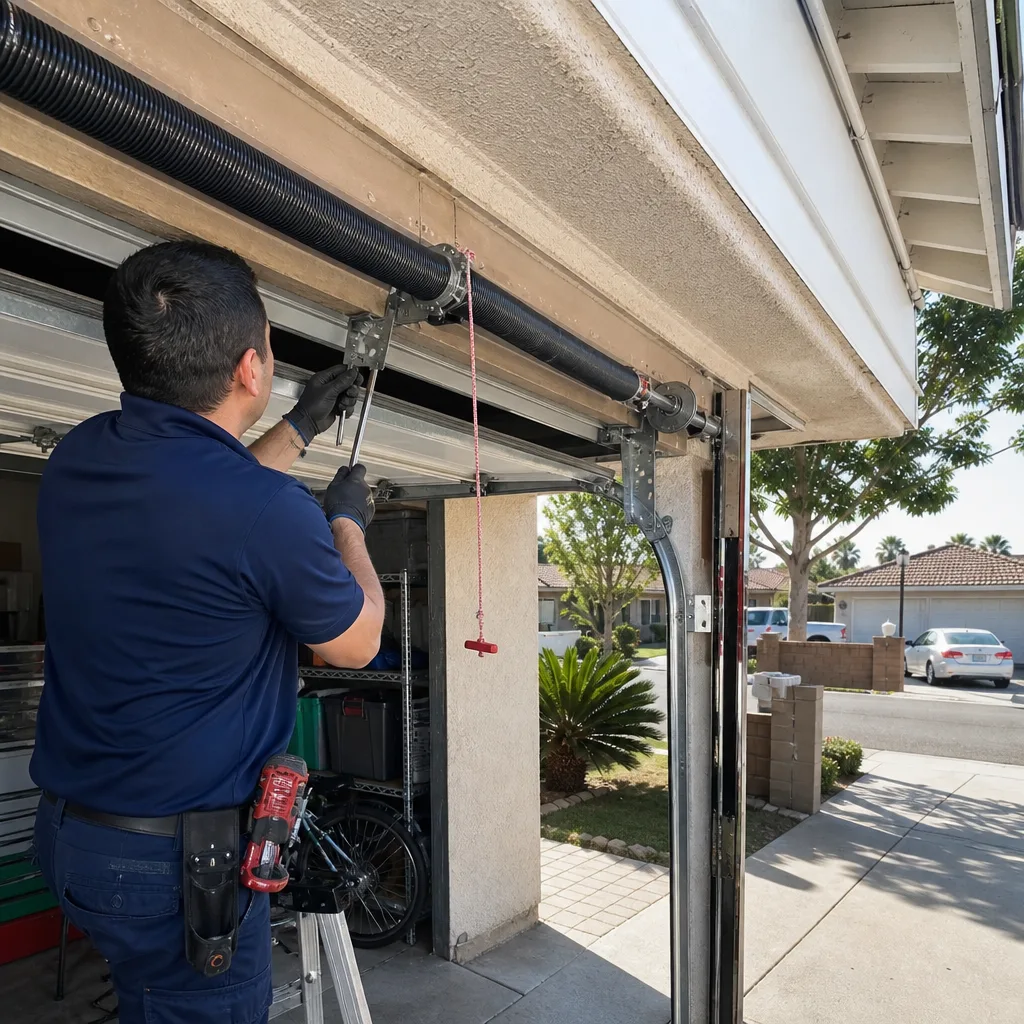
Replacing a garage door torsion spring stores enough energy to cause a fatality when it releases - not metaphorically, but mechanically: a standard residential spring holds 150 to 200 foot-pounds of torque when wound. That single number divides every garage door task into one of two columns, and it has nothing to do with how handy you are. In Anaheim, where the average attached garage holds a car, a water heater, and often a second refrigerator, the question isn’t whether you can follow a YouTube tutorial. It’s whether the component you’re about to touch can injure you if you get it wrong. This guide sorts every common garage door job into its proper column, explains what each one actually costs in time and tools, and tells you when the smarter move is to pick up the phone instead of the socket wrench. For Garage Door Cost Breakdown: The Anaheim Homeowner’s Reference for 2026, see our dedicated breakdown.
Quick Answer
DIY garage door work in Anaheim is only appropriate for low-risk, non-tension components: sensor realignment, limit switch adjustment, lubrication, and weatherseal replacement. Torsion spring replacement, cable work, and track realignment under tension should always go to a licensed professional, because the stored energy in these components can kill, and the specialized tools and California liability exposure make DIY a bad trade at any skill level. The dividing line is not your confidence - it’s whether the part stores mechanical energy when you touch it.
Table of Contents
- The Binary Component List: What’s Yours and What’s Not
- California Liability: What Homeowner-Performed Work Actually Exposes You To
- The Tool Cost Reality Check: What YouTube Doesn’t Show You
- When DIY Creates a More Expensive Professional Job
- The Documentation Advantage: Paper Trails and Resale in Anaheim
- Anaheim-Specific Factors: Heat, Salt Air, and Garage Door Wear
- Step-by-Step: The Only 4 DIY Tasks We’ll Actually Recommend
- What Each Job Costs: DIY vs Professional in Anaheim
BeforeAfterThe Binary Component List: What’s Yours and What’s Not
Garage door work is not a spectrum. It’s a binary, and the dividing line is mechanical energy. Every component on a garage door falls into one of two categories: parts that are inert when you touch them, and parts that are storing force. The first category is yours. The second is not.
Within a Homeowner’s Scope
- Photo eye sensor alignment: The safety sensors at the bottom of the track are low-voltage, inert components. When the door won’t close and the opener lights blink twice, the fix is usually a bracket that’s been bumped out of alignment. You loosen one wing nut, realign the beam, and retighten. Ten minutes, no stored energy.
- Limit switch adjustment: The up-limit and down-limit controls on the opener motor tell the door where to stop. If the door doesn’t close all the way or reverses an inch after touching the ground, adjusting these dials is a flathead screwdriver job. No tension, no risk.
- Lubrication: White lithium grease on hinges and a silicone-based spray on rollers and springs. Twice a year in Anaheim is the right cadence, given our dry heat. This is routine maintenance, not repair.
- Weatherseal replacement: The rubber strip along the bottom of the door dries out and cracks in Southern California sun. Pull out the old T-shaped bead, slide in the new one. The door stays in place the whole time.
Not Within a Homeowner’s Scope
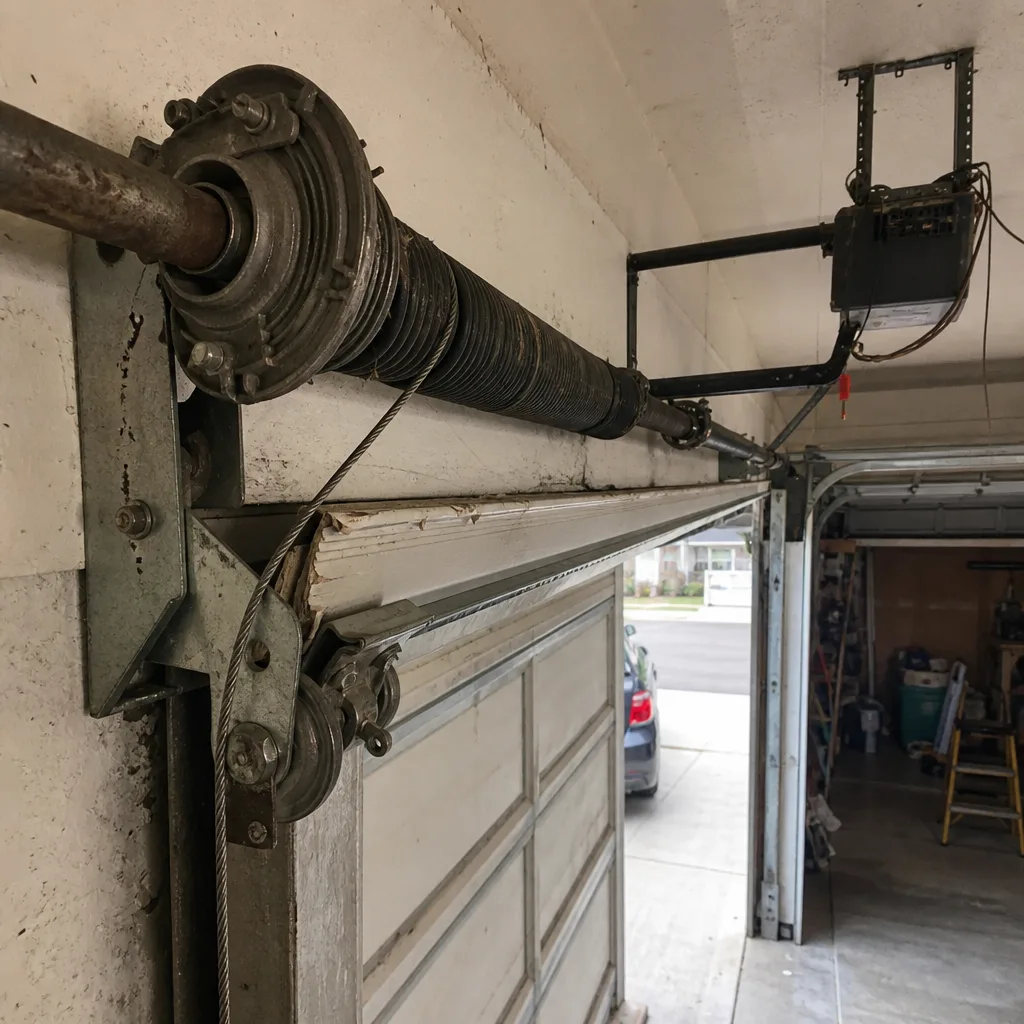
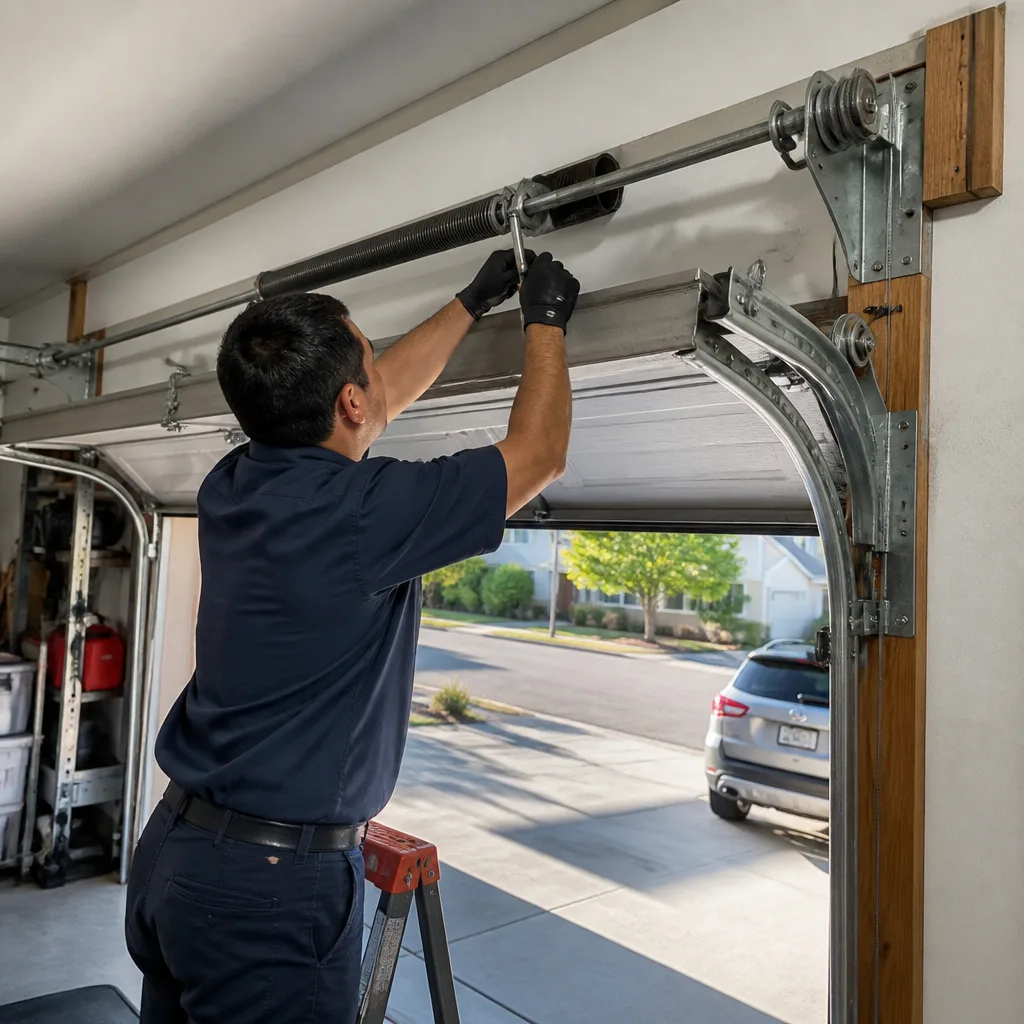
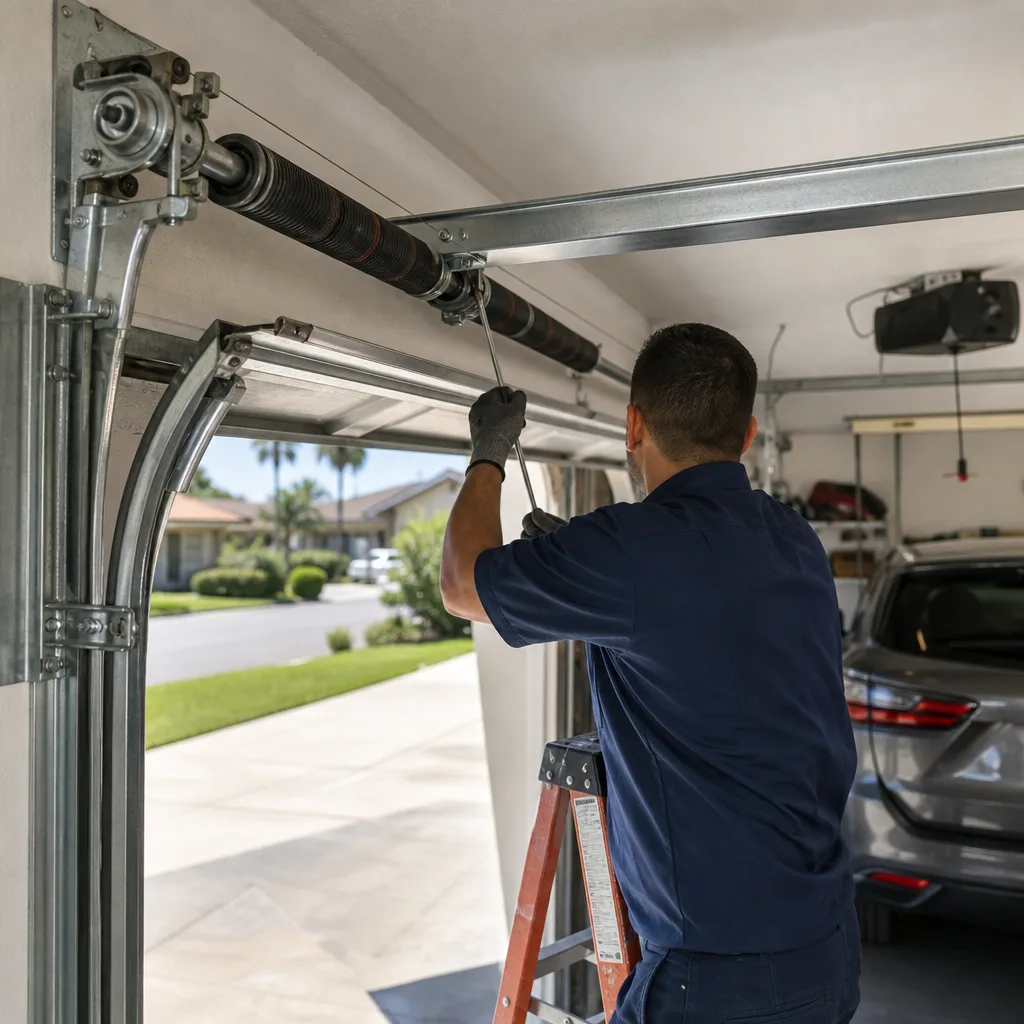
- Torsion spring replacement: The spring above the door on the torsion tube holds 150 to 200 foot-pounds of torque when wound. One wrong move with a winding bar and the energy releases into whatever is in its path - typically a wrist, a face, or a ladder. This is the single most dangerous household repair in the United States by injury rate.
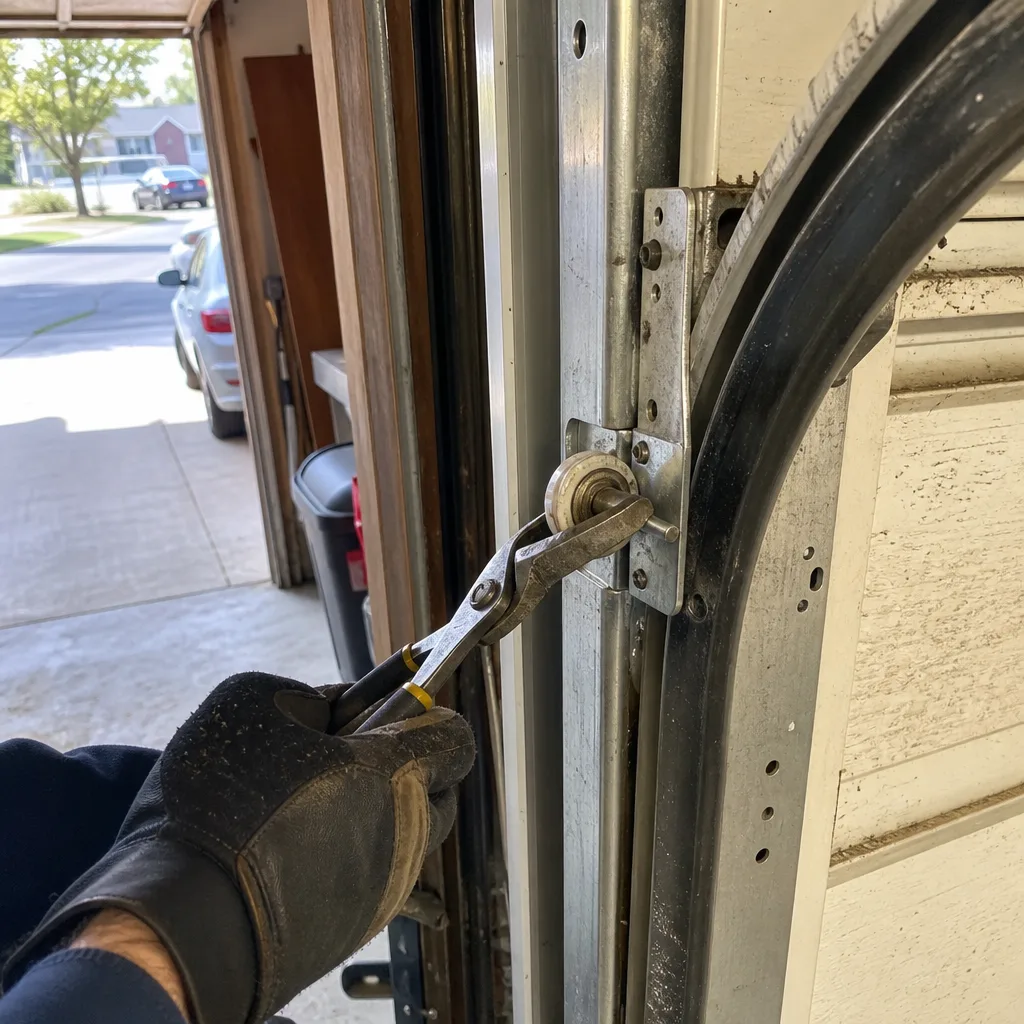
- Cable replacement: The lift cables that run along each side of the door are connected to that same torsion system. Cutting or unspooling a cable without first unwinding the spring puts you directly in the path of the spring’s stored energy. The cable itself is not dangerous. What it’s attached to is.
- Track realignment under tension: If the track is bent or the door has come off its rollers, the door’s weight - 130 to 250 pounds for a typical Anaheim two-car - is no longer balanced. Forcing the track back into place while the spring is wound is how fingers get pinched off and how doors come down on people.
The rule is simple enough to write on a sticky note: if the part you’re touching is connected to the spring system, it’s not a DIY job. If it’s not, it might be. That’s the entire decision tree.
California Liability: What Homeowner-Performed Work Actually Exposes You To
Here’s the part most DIY articles skip entirely, and it’s the part that matters most in Anaheim. When you perform garage door repair on your own home and that repair later fails - say, a cable snaps three months after you “adjusted” it, or a spring you jury-rigged lets go while a family member is walking through - you are now legally and financially exposed in a way a professional repair would have covered. Before starting any project, review Garage Door Permits, Codes & Inspections in CA: What You Need to Know to understand your obligations.
California case law treats homeowner negligence as a discoverable fact in subsequent injury claims and insurance disputes. If someone is injured by a garage door that you repaired yourself, your homeowner’s insurance carrier will investigate whether the repair was performed by a licensed contractor. If it wasn’t, and the carrier determines the repair was a contributing factor, you may be facing a denied claim and personal liability. That’s not a hypothetical. We’ve seen the aftermath in Orange County: a homeowner who replaced his own extension springs, the door came off its track, and the insurance company’s first question was who had last worked on it.
- Step 1 - Understand the exposure: Homeowner’s insurance covers accidents. It does not automatically cover injuries caused by unpermitted, unlicensed work performed by the policyholder. The distinction matters in California.
- Step 2 - Check your own insurer’s position: Some policies have specific exclusions for injuries caused by work that required a contractor’s license. Garage door spring repair in California is a C-61/D-28 specialty classification. It’s a licensed trade.
- Step 3 - Consider the disclosure obligation: When you sell a home in California, you sign a Transfer Disclosure Statement. “Any known material defects or repairs” includes a garage door you repaired yourself. Undocumented DIY work becomes a disclosure item that can complicate escrow or reduce your sale price.
A licensed professional carries his or her own general liability insurance. When Servo Garage Doors Anaheim sends a technician to your home, the work is documented, warranted, and covered. That paper trail is not bureaucracy - it’s the thing that stands between you and a denied claim.
The Tool Cost Reality Check: What YouTube Doesn’t Show You
The most-watched garage door spring replacement tutorial on YouTube has over 4 million views and makes the job look like a 20-minute Saturday morning project. Here’s what the video doesn’t tell you about the tool list, and what it actually costs to assemble it.
What a Real Torsion Spring Job Requires
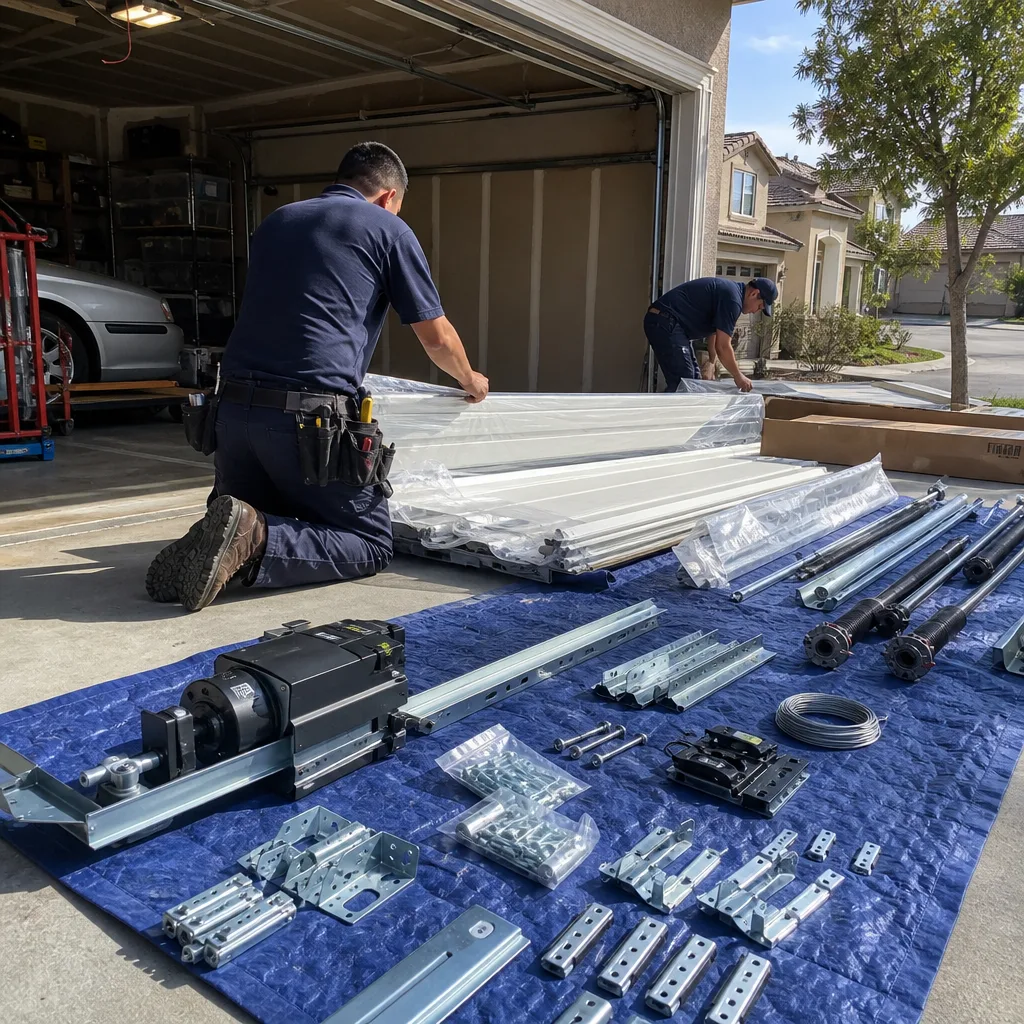
- Winding bars: Two half-inch diameter, 18-inch steel rods. You cannot use screwdrivers, rebar, or any substitute, because the steel grade and diameter are load-rated for the torque. The moment a home-gamer substitutes an extension handle is the moment the bar snaps and the spring unwinds into them. Cost: $20-$45 for a proper pair.
- A full spring kit: The spring itself, plus the correct winding cone, set screws, and center bracket hardware. This is matched to the door’s weight and height - not a universal part. Buying the wrong spring online is the single most common reason we get called to fix a DIY job. Cost: $80-$150 for a quality spring, but the correct one costs whatever your door’s weight chart says it costs.
- An inch-pound torque wrench: Required to set the set screws to spec. Not a foot-pound torque wrench. This one tool is $60-$120 at any Anaheim Harbor Freight or Home Depot.
- A ladder rated for 300 pounds: You’re working overhead with both hands on the winding bars. A wobbly 225-pound ladder is how you end up on the ground. Cost: $80-$200 for a stable unit.
- Safety glasses and leather gloves: The minimum that keeps your eyes and hands intact when - not if - a spring lets go. Cost: $25-$50.
Add it up: the true tool and materials cost for a one-time, correct DIY torsion spring replacement runs $265 to $565, depending on what you already own. A professional torsion spring replacement through Garage Door Repair in Anaheim is a flat, written price that typically lands in the same range - and includes the warranty, the documentation, and the fact that if it’s not right, we fix it under our 365-Day Done Right Promise. You’re not saving money by DIYing this. You’re buying risk at retail.
When DIY Creates a More Expensive Professional Job
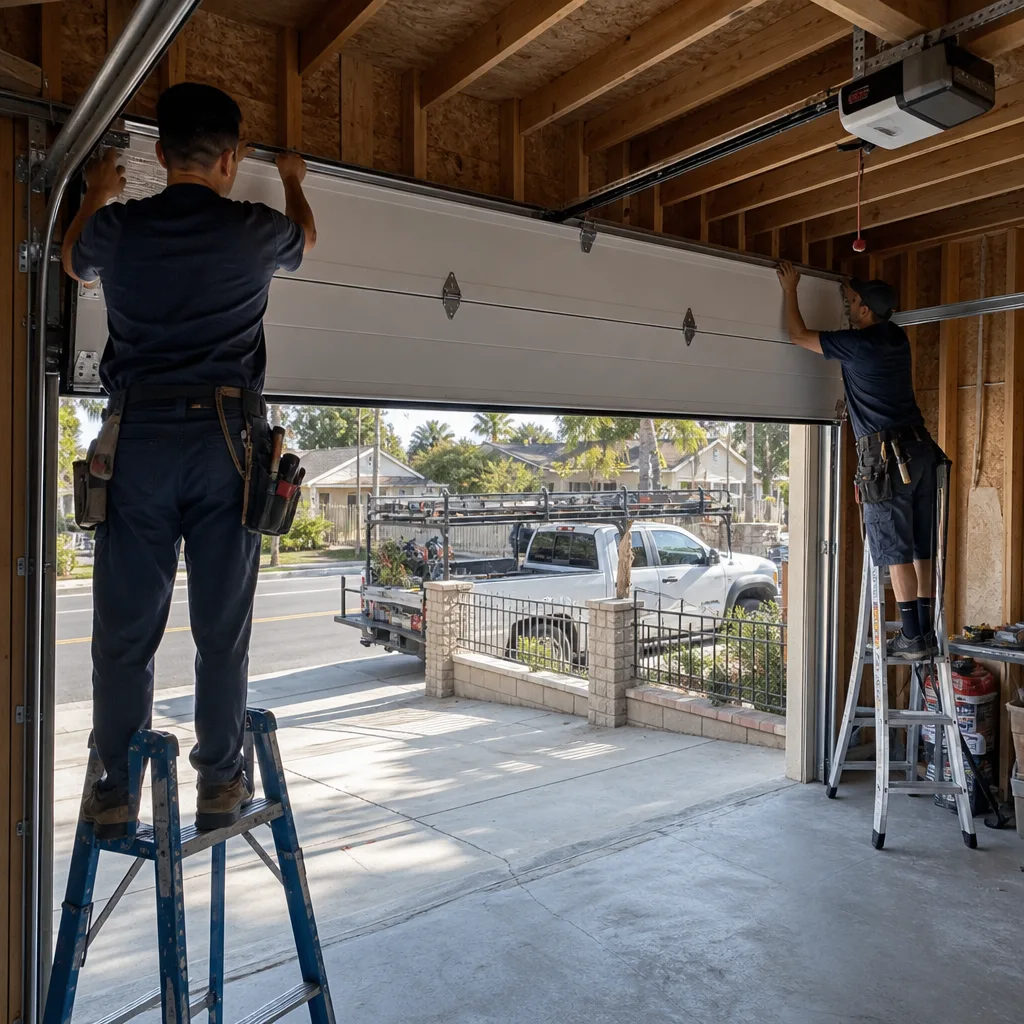
We get a certain phone call about once a month in Anaheim, and it always starts the same way: “I tried to fix it myself and now it’s worse.” Here’s what that call actually costs, in the specific ways a partially completed repair adds diagnostic time and scope to a professional visit.
- Stripped winding cones from using the wrong bar size: A homeowner starts with a screwdriver, the cone strips, and now the technician cannot unwind the old spring safely. The job goes from a standard replacement to a controlled containment, which adds labor and sometimes requires cutting the torsion tube. Add $100-$250 to the final scope.
- Removed components that were not the problem: The door was making noise; the homeowner removed the hinges, lubed everything, and reassembled it out of order. Now the door is misaligned, and the original noise is still there. Diagnostic time doubles because the technician must first identify what was touched, then diagnose the actual fault underneath it. Add $75-$150 in diagnostic labor.
- Half-installed springs from a kit bought online: The spring is on the tube, but the homeowner got nervous during winding and stopped at 12 quarter-turns instead of the required count (which varies by door height - typically 28 to 32 quarter-turns for a 7-foot door). The door is now dangerously unbalanced, and the technician must finish the wind under load conditions the homeowner created. This is a safety-stop situation, and it’s billed as such.
- Bent tracks from “persuading” the door with a hammer: When the door came off track, the homeowner hammered the track back into approximate position. Now the track is warped, the rollers bind, and the entire track assembly needs replacement instead of realignment. A $180 realignment becomes a $450 track replacement.
We say this without judgment: the impulse to fix it yourself is reasonable. But a garage door is a system where a wrong step compounds into a larger wrong step. The most expensive repair is the one that happens after the first repair failed.
The Documentation Advantage: Paper Trails and Resale in Anaheim
Anaheim has a hot real estate market, and the homes in it are increasingly bought by people who read inspection reports line by line. That’s the environment where an undocumented DIY repair on a garage door becomes a financial liability at the worst possible moment - during escrow.
When you use a professional service, you receive a documented record of what was found and what was done. At Servo Garage Doors Anaheim, that’s not a courtesy - it’s the founding rule of the company. Every visit includes a photo record of the failed component, taken before any work is quoted or performed. That photo is what the technician shows you when they explain the repair, and it’s what you keep when they leave. The founding rule - photograph the failed component before quoting a replacement - is now codified as Clause 4 of The Haven Standard, the documentation system Servo operates under as an independently owned and operated business.
Here’s why that matters at resale:
- Disclosure compliance: California’s Transfer Disclosure Statement asks the seller to disclose known defects and repairs. A garage door with a professional paper trail is a disclosed, documented, closed item. An undocumented DIY repair is a question mark the buyer’s inspector will flag.
- Buyer confidence: A stack of repair records with dated photos says: this door has been maintained, and its history is known. That’s worth money at the negotiating table. Buyers in Anaheim’s inner-ring suburbs are reading inspection reports with the same eye Servo Garage Doors Anaheim home customers use when choosing whether to repair or replace their doors.
- Warranty transferability: Most professional garage door work carries a warranty that attaches to the home, not the person. When you sell, the new owner inherits the coverage. DIY work has no such coverage, which means the buyer prices the risk into their offer.
We’ve seen the difference in close. A documented, professionally maintained garage door closes with no contingencies. A DIY door with a mystery history gets a credit request back from the buyer, and that credit is usually bigger than the professional repair would have cost in the first place.
Anaheim-Specific Factors: Heat, Salt Air, and Garage Door Wear
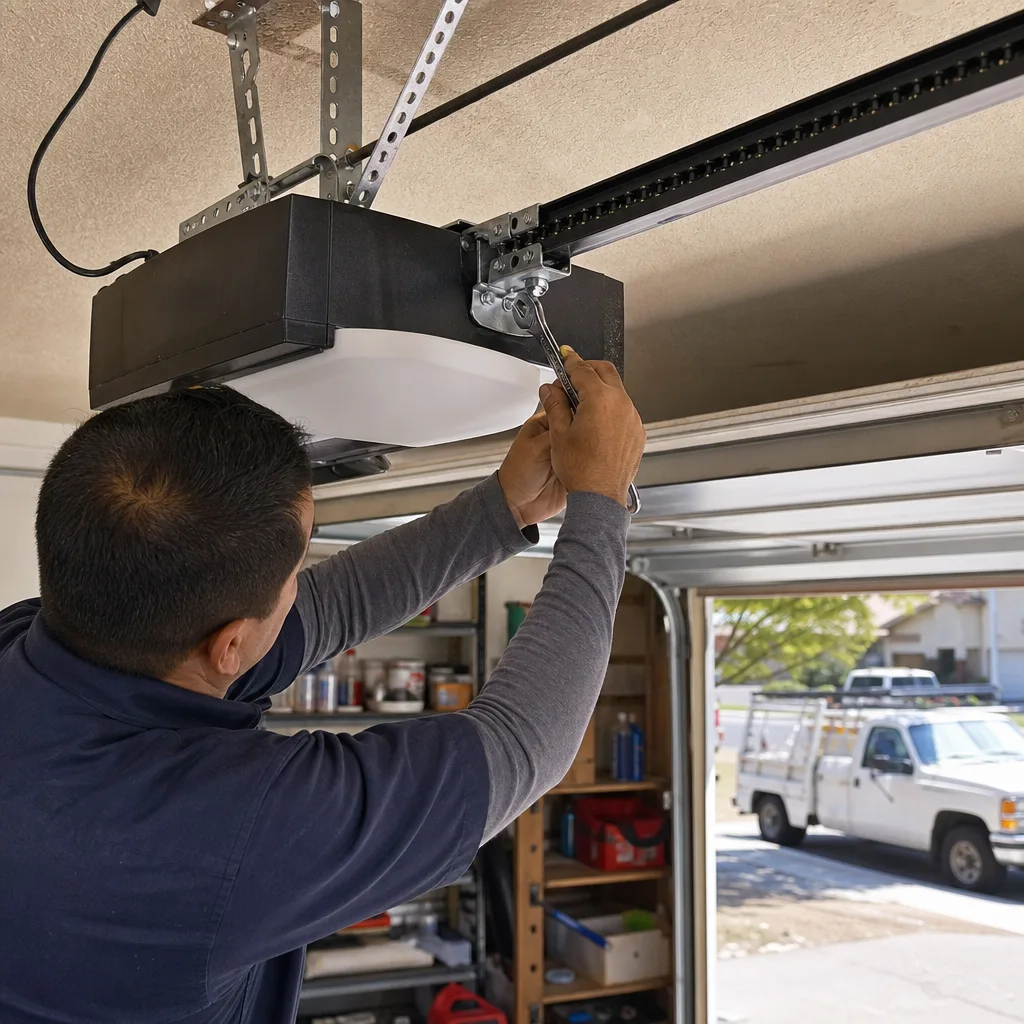
Garage doors in Anaheim wear differently than garage doors in, say, Minneapolis or Seattle. The failure patterns we see here are products of the local environment, and they affect the DIY-versus-professional decision in ways that are specific to this city.
Dry Heat and Rubber Degradation
Anaheim has a hot-summer Mediterranean climate with an average of 278 sunny days a year. That’s not a Chamber of Commerce stat - it’s a mechanical variable. The bottom weatherseal on a garage door in Anaheim dries out and cracks in about three to five years, versus seven to ten in a more humid climate. The same applies to roller bearings, which lose their internal grease faster in sustained heat. This is why we recommend lubing twice a year here, not once. It’s a small, homeowner-appropriate task that has an outsized effect on component life. For a full schedule of what to check and when, see our Garage Door Repair Maintenance Checklist for Anaheim Homeowners.
Coastal Salt Influence on Hardware
Anaheim sits about 12 miles inland from the Pacific, and the marine layer pushes far enough east to affect coastal-adjacent neighborhoods. Hinges and brackets on homes in the western parts of the city, near the Anaheim Hills boundary, show faster surface corrosion than houses in the flatlands. If you’re lubricating a Wayne Dalton door in west Anaheim and you see white oxidation on the hinges, that’s environmental, not a defect. A dry silicone lubricant works better than a grease here, because it doesn’t attract dust to the same degree.
Home Stock Ages and Spring Life
Anaheim’s post-1980 development boom means most garage doors in the city are torsion-spring systems, not the older extension-spring designs found in pre-war housing stock. Torsion springs are rated for a cycle life - typically 10,000 cycles for a standard spring, which in a high-use household translates to about seven to ten years. When we replace a spring in Anaheim, we ask about the household’s door usage because a two-car family that opens the door six times a day will wear through a standard spring noticeably faster than a single-driver household. A higher-cycle spring, rated at 20,000 or 30,000 cycles, costs more upfront and is often the better value in a full household. This is the kind of nuance a parts store won’t tell you and a YouTube video won’t know to ask.
Step-by-Step: The Only 4 DIY Tasks We’ll Actually Recommend
Here’s the complete list. If a task is not on this list, it doesn’t belong on your Saturday schedule. These four are safe, they’re within scope, and they don’t require winding down a spring or touching a cable under tension.
1. Photo Eye Sensor Alignment
- Look at the two safety sensors at the bottom of the door track, one on each side. Each has a small LED light.
- If one light is off or blinking, loosen the wing nut on that sensor’s bracket.
- Realign the sensor so it points directly at the opposite sensor. The sending eye has a steady amber light; the receiving eye shows a steady green light when aligned.
- Test the door by holding down the wall button. If it closes fully, the alignment is right.
2. Limit Switch Adjustment
- Find the opener motor unit. Look for two plastic adjustment dials or screws, usually labeled “UP” and “DOWN.”
- If the door doesn’t close all the way, turn the DOWN limit screw a quarter turn clockwise.
- If the door hits the ground and immediately reverses, turn the DOWN limit a quarter turn counterclockwise.
- Test after each quarter turn. Small adjustments compound quickly on these controls.
3. Lubrication
- Use a white lithium grease on hinges and a dry silicone spray on rollers, springs, and bearings.
- Apply to the hinge pivots, not the hinge faces. Rollers get a small amount on the bearing, not the wheel surface.
- Wipe away excess. The point is lubrication, not coating.
- Do this every six months in Anaheim, given the heat and dust.
4. Bottom Weatherseal Replacement
- With the door closed, measure the width of the bottom panel. Buy a replacement T-shaped vinyl seal of matching width.
- Lift the door about two feet and lock it in place with vise grips on the track if you have them.
- Pull the old seal out from one end. It slides out of the T-channel.
- Slide the new seal in from one side, pushing it across until it’s centered. Close the door and check that it contacts the floor evenly.
That’s the list. If the task involves a spring, a cable, a track, or the opener’s motor or logic board, stop and call a professional. Those components are under tension, or they control a door that is under tension, and the risk calculation changes entirely.
What Each Job Costs: DIY vs Professional in Anaheim
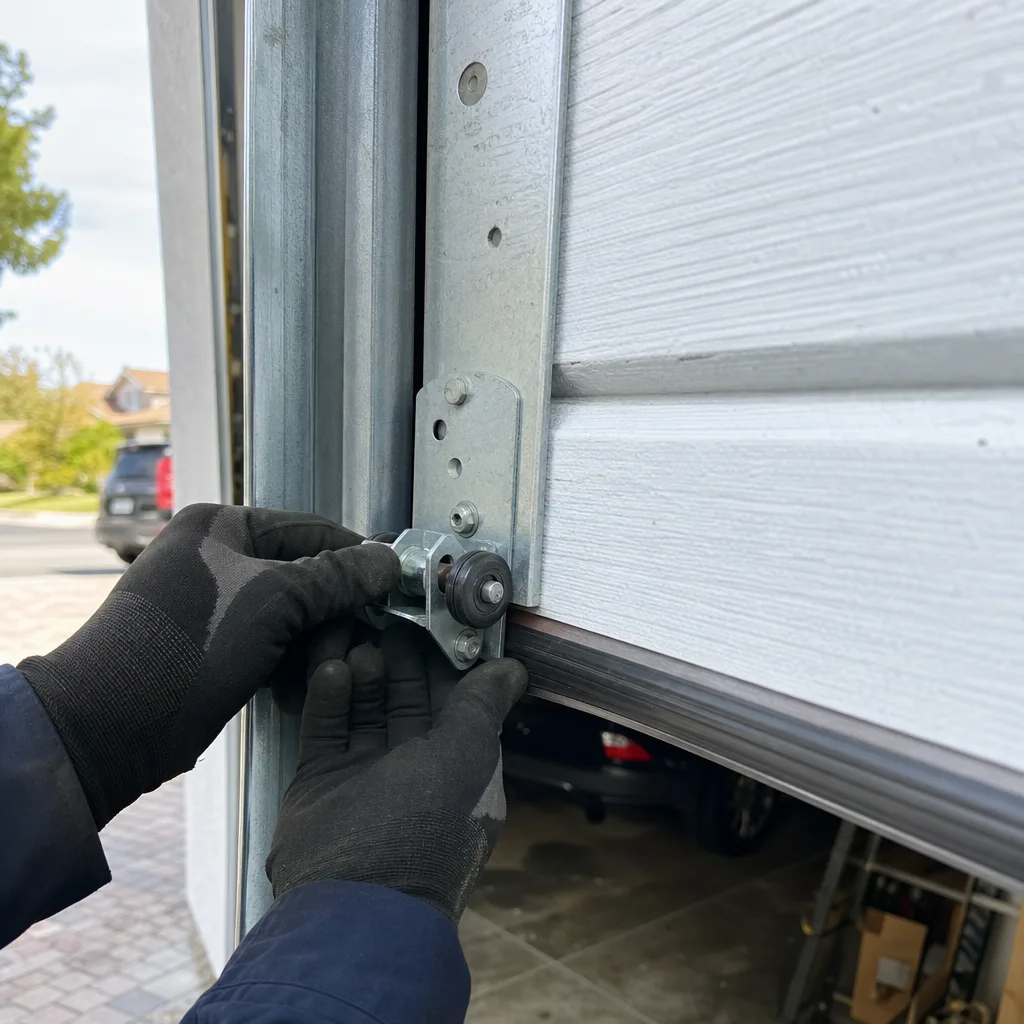
Dollar ranges in this section reflect what we see in the Anaheim market, where labor rates and part costs differ from the national averages you’ll find on generic home improvement sites. These are real numbers from real jobs.
| Job | Typical DIY Cost (Tools + Parts) | Typical Professional Cost | Real Difference |
|---|---|---|---|
| Sensor alignment | $0 if no parts needed | $85-$125 service call | DIY is clearly worth it |
| Limit switch adjustment | $0 | $85-$125 service call | DIY is clearly worth it |
| Lubrication | $15-$25 for products | $85-$125 service call | DIY is clearly worth it |
| Bottom weatherseal replacement | $20-$40 for the seal | $95-$150 installed | DIY saves a moderate amount |
| Torsion spring replacement | $265-$565 for tools and correct spring | $180-$340 installed | Professional is equal or cheaper, with warranty |
| Cable replacement | $50-$100 for parts | $140-$260 installed | Professional is worth the price for the safety risk alone |
| Track realignment | N/A - not safely DIYable | $150-$300 | No DIY option exists for the rational homeowner |
The biggest misconception is that professional work is always more expensive. That’s true for the small stuff. It’s not true for the big stuff, and it’s especially not true when you factor in the warranty, the documentation, and the injury risk. If you’re choosing a new door rather than repairing one, Garage Door Installation in Anaheim is a documented process with a written price before any work starts, per Clause 1 of The Haven Standard.
Common Mistakes to Avoid
- Substituting tools on a torsion spring job: Using a screwdriver or rebar instead of proper winding bars is the single most common cause of garage door repair injuries in the United States. The bar snaps, the spring unwinds, and the force goes into the nearest body part.
- Buying a spring online without matching it to the door’s weight: A spring rated for a 150-pound door installed on a 225-pound Anaheim two-car door will fail early and unpredictably. Springs are not universal parts, no matter what the listing says.
- Adjusting tension without understanding cycle life: A spring that’s been in service for nine years in Anaheim’s dry heat is near the end of its cycle life. Tightening it “a little more” just moves the failure date a few weeks and makes the eventual break more dangerous.
- Ignoring a door that’s out of balance: If the door doesn’t hold position at the midway point, the spring is losing tension. Continuing to use the opener on an unbalanced door burns out the motor gear and adds a $200-$450 opener repair to the spring replacement.
- Doing electrical work on an opener without checking voltage: Openers run on 120V. The low-voltage safety circuit is separate. Mixing up the two while the opener is plugged in is a real shock hazard. Unplug the unit before any opener work.
- Assuming the cheapest quote is the same scope: If a $99 Anaheim spring replacement offer doesn’t include the photo documentation, the warranty terms, and the written scope, you’re comparing different jobs. The price on the page is only useful next to the scope it covers.
When to Call a Professional
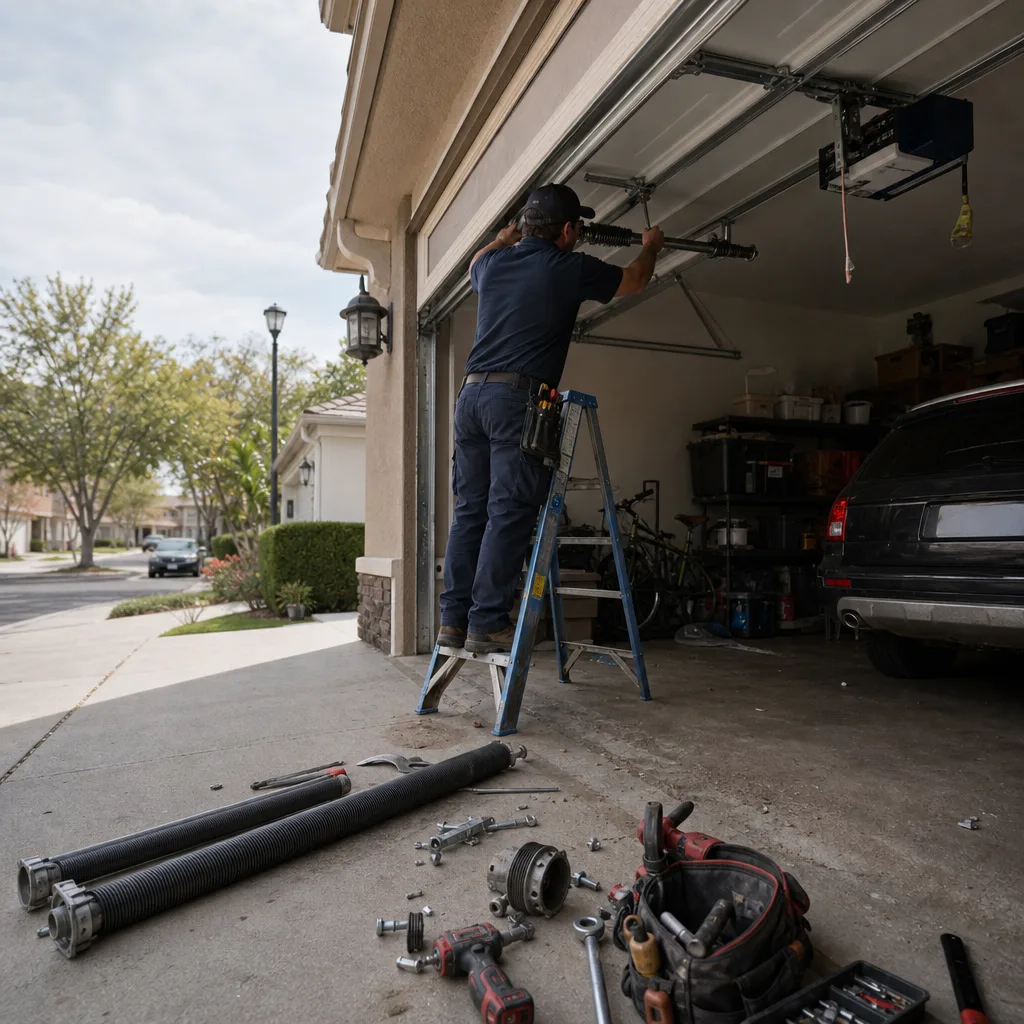
If the door won’t open and the spring is in two pieces, call. If the cables are fraying or snapped, call. If the door came off its track, call. If the opener is making a grinding sound that wasn’t there last week, call. If you’re not sure which spring you have, which cable connects to what, or whether the part you’re holding is the one that failed, call. Servo Garage Doors Anaheim answers the phone with a live person, 24/7, including emergency garage door calls. You’ll get a named technician and an on-the-way text, not a callback window. Every job is quoted with a flat, written price and written scope before any work begins. The estimate is free. Call (949) 822-8002.
Frequently Asked Questions
No - torsion spring replacement requires specialized winding bars, a load-rated ladder, and an inch-pound torque wrench, and the spring stores 150-200 foot-pounds of torque that can cause fatal injury when released. This is a licensed trade in California (C-61/D-28 specialty classification), and a professional replacement in Anaheim typically costs $180-$340 installed, with warranty. Call (949) 822-8002 for a written, flat-price quote before any work starts.
Photo eye sensor alignment, limit switch adjustment, lubrication, and bottom weatherseal replacement are the only four tasks we recommend for homeowners. All four involve inert or low-voltage components with no stored mechanical energy. Anything involving springs, cables, or tracks is outside homeowner scope.
Professional repair costs in Anaheim range from $85-$125 for a basic service call to $180-$340 for a torsion spring replacement and $450-$800 for a track replacement, depending on the door’s weight and the extent of the damage. Servo Garage Doors Anaheim provides a flat, written price and written scope before any work begins, so there’s no surprise at the end. Call (949) 822-8002 for a free estimate.
Yes - California’s Transfer Disclosure Statement requires sellers to disclose known defects and repairs, and an undocumented DIY repair becomes a question mark during escrow. A professional repair generates a photo record of the failed component and a written warranty that transfers with the home. Buyers in Anaheim’s current market read inspection reports carefully, and the difference between documented and undocumented frequently shows up as a buyer credit request.
Most common Anaheim garage door repairs - torsion springs, cables, hinges, rollers, sensors, and limit switches for major brands including Amarr, Wayne Dalton, and Raynor - are stocked on our service trucks at Servo Garage Doors Anaheim. That means most repairs are completed the same visit. If a part needs to be ordered for an unusual door, the written scope will state that before we begin, and you’ll know the total price before work starts.
Yes - bring any written estimate from another Anaheim garage door company and we’ll provide a Free Second Opinion. No coupon, no code, no obligation. It’s a way of checking the first quote against a flat, written scope from a company that photographs the failed component before quoting anything, per Clause 4 of The Haven Standard. Call (949) 822-8002 to set it up.
The Bottom Line
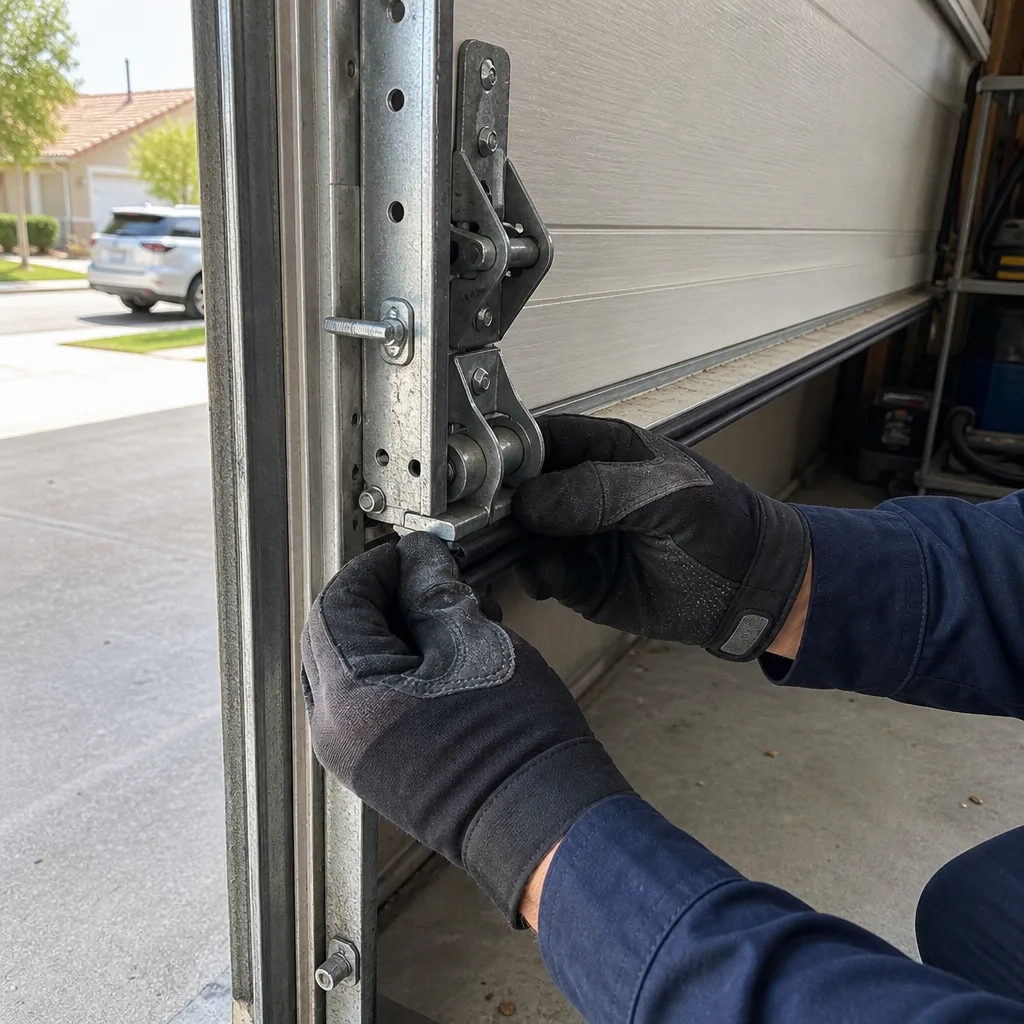
The DIY-versus-professional question for garage doors in Anaheim is not a test of your skill, your courage, or your willingness to learn. It’s a binary test of mechanical energy: if the part stores force, it’s not yours to handle. The four tasks we’ve named are safe, satisfying, and genuinely within a homeowner’s scope. Everything else carries a risk profile that no amount of YouTube confidence can neutralize - and the economics don’t work out either, once you price the tools correctly and factor in the liability. For the dangerous stuff, call a professional who writes down a price before touching anything. Servo Garage Doors Anaheim has been doing it that way since 2015: a flat, written price and written scope on every job, a photo record of what we found, and a 365-Day Done Right Promise if it’s not right. Call (949) 822-8002 for a free estimate.
Written by Marcus Deller, Owner at Servo Garage Doors Anaheim, serving Anaheim since 2015.