
Last updated September 19, 2026
Full 25-point door and opener safety check with every visit - springs, cables, rollers, tracks, and your LiftMaster or Chamberlain opener included
You get a price before we start. It does not change when the truck arrives.
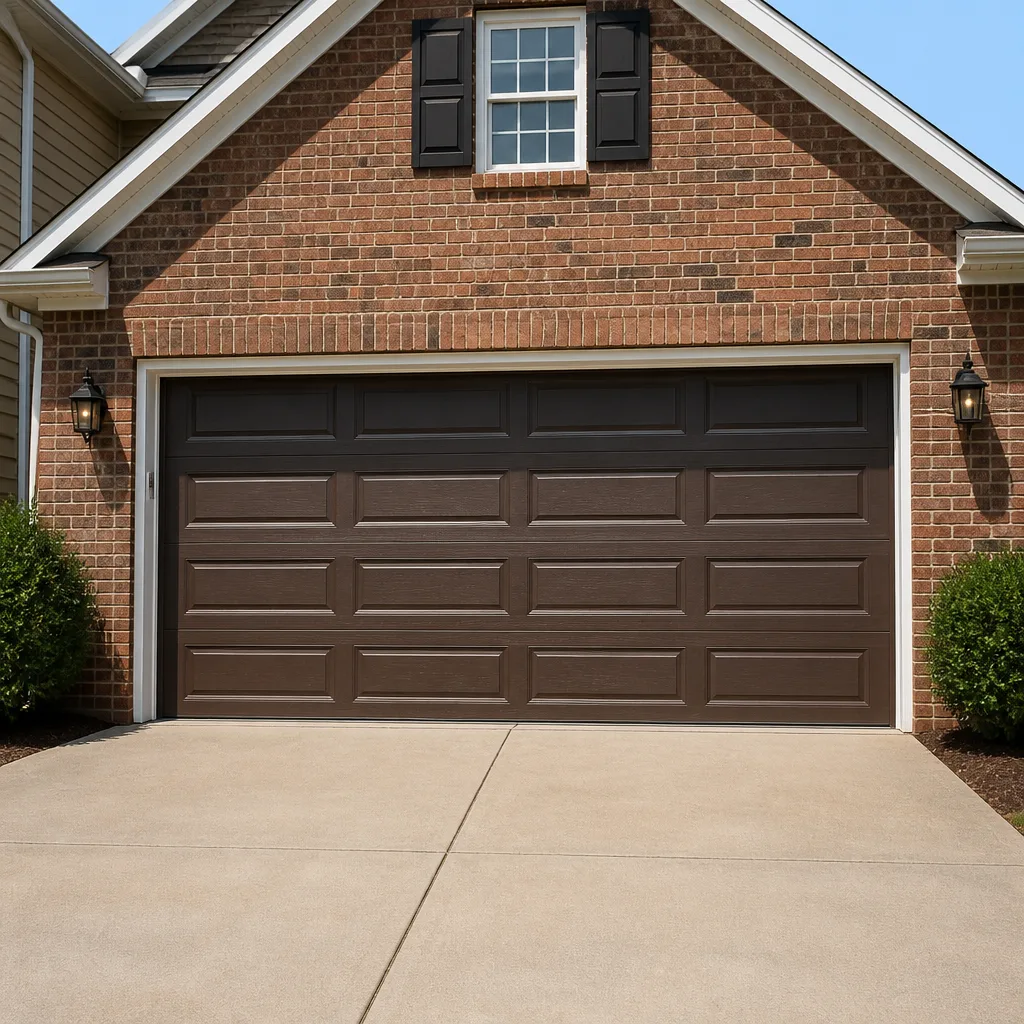
Carriage house
Full-view glass
Chamberlain openers
 Before
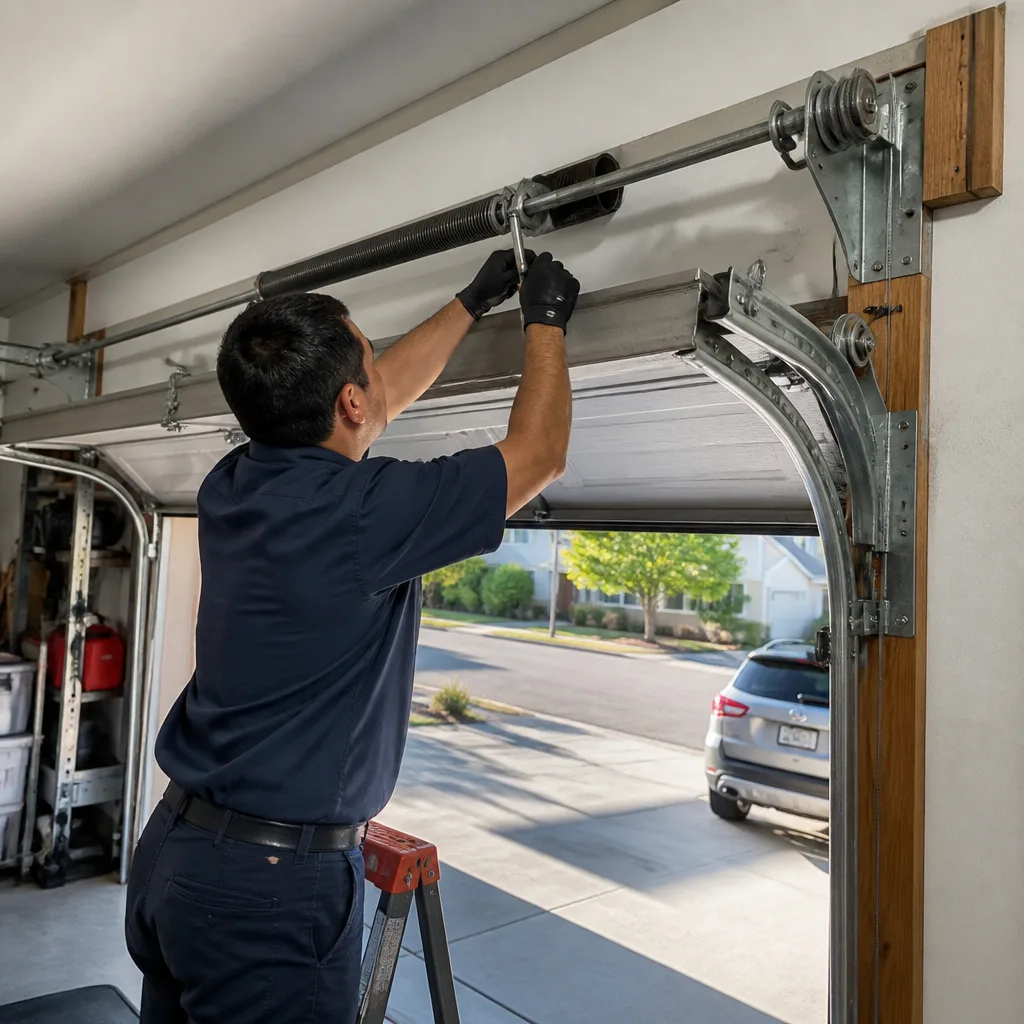 After
After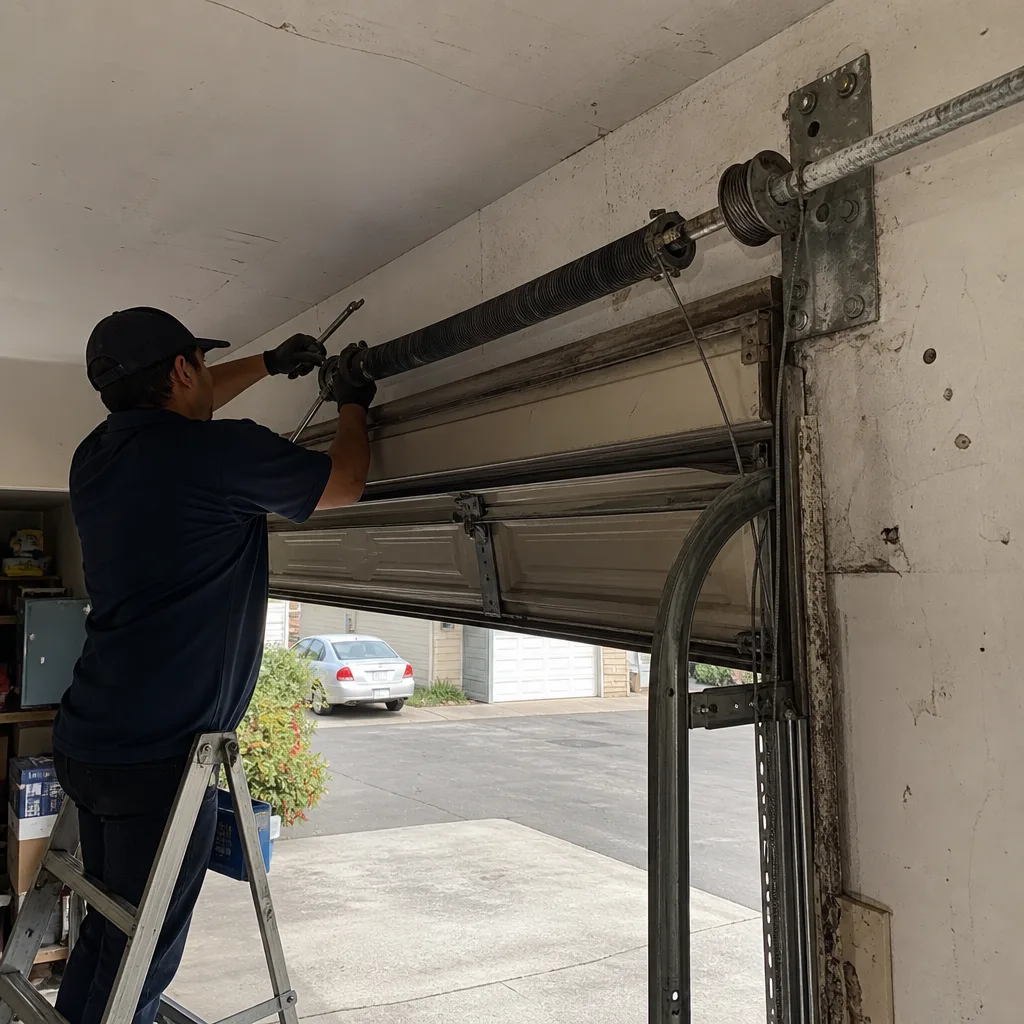 Before
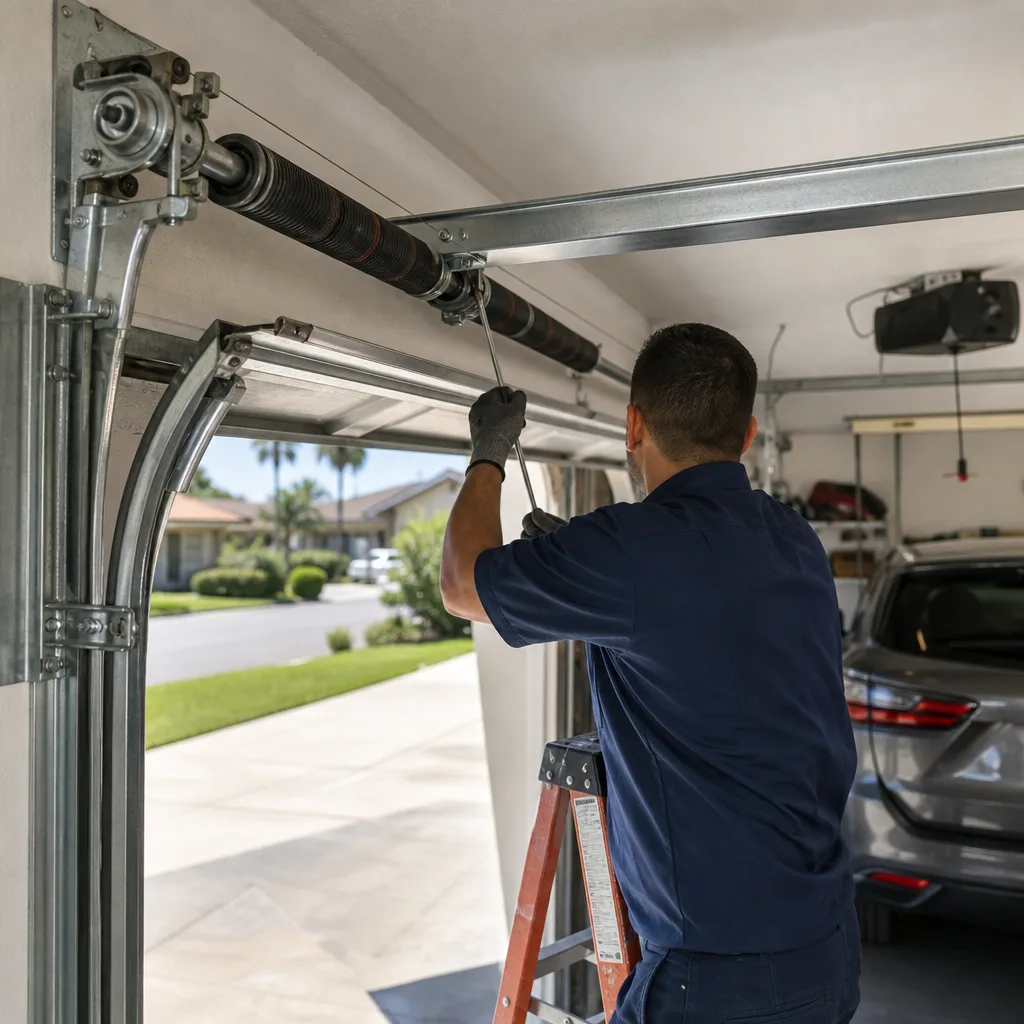 After
After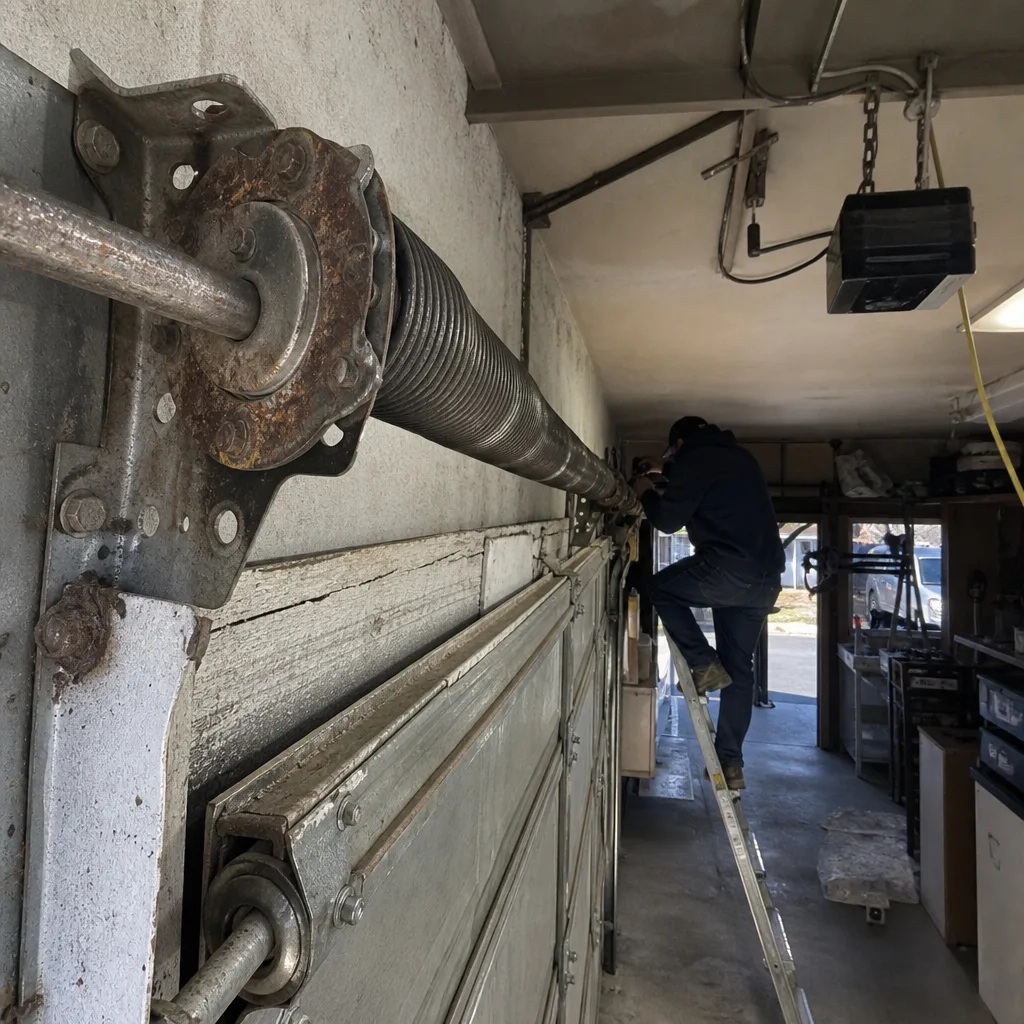 Before
 After
AfterSeasonal Garage Door Care for Anaheim: Year-Round Homeowner’s Guide
Anaheim averages fewer than 15 inches of rain per year, which leads most Orange County homeowners to skip weatherseal inspection entirely. That makes sense until you understand what actually damages garage doors here. It’s the Santa Ana winds in October and November, not rain, that drives failure in bottom seals and side weatherstripping, forcing fine particulate into opener motor housings. This guide walks through what degrades, when it degrades, and what a homeowner should actually check each season in Anaheim, so you’re not paying for repairs that a twice-yearly inspection would have caught. For more guides & resources, see our blog.
Quick Answer
In Anaheim, seasonal garage door care comes down to four anchor points: a pre-Santa Ana inspection each September focused on seals and opener dust ingress, a spring-balance test after any week above 95°F, a marine-layer humidity check on wood doors and seal compression in June and July, and lithium-grease application on opener drive systems each winter when overnight temperatures drop toward the 40s. Most Anaheim homeowners need to inspect weatherstripping and door balance twice a year, which takes about 20 minutes total. The failures we see most often, at Servo Garage Doors Anaheim home, are seal failures and spring tension drift that homeowners in wetter climates rarely encounter; it’s the dry, wind-driven dust here that shortens those components’ life.
Table of Contents
- The Santa Ana Season: September Pre-Wind Checklist
- Summer Heat and Torsion Spring Tension: What Metal Expansion Does to Balance
- Marine Layer Season: Humidity Cycling from June Through July
- Winter Temperature Drops and Lithium Grease Viscosity in Opener Drive Systems
- Year-Round UV Exposure: Panel Finish Degradation on Steel, Aluminum, and Wood Composite
- The Twice-Yearly Maintenance Routine That Fits Anaheim’s Climate
- Common Mistakes to Avoid
- When to Call a Professional
- Frequently Asked Questions
BeforeAfterThe Santa Ana Season: September Pre-Wind Checklist
The Santa Ana winds that move through Anaheim from late September through November are the single most damaging weather event for garage doors in this city. We’re not talking about dramatic structural failure, though that happens. We’re talking about the slow, abrasive damage that accumulates from sustained 25 to 40 mph winds carrying fine dust and grit from the inland valleys. That particulate settles into opener motor housings, coats lubrication points, and cuts into the rubber compounds of bottom seals and side weatherstripping.
Here’s the pre-Santa Ana checklist we recommend for every Anaheim homeowner, and it’s the same list our technicians work from when they do seasonal inspections here:
- Bottom seal compression test: Close the door fully, then look for daylight under the corners. In Anaheim’s dry climate, rubber bottom seals harden and shrink rather than rot. If you see light, wind is getting in, and the seal is no longer doing its job.
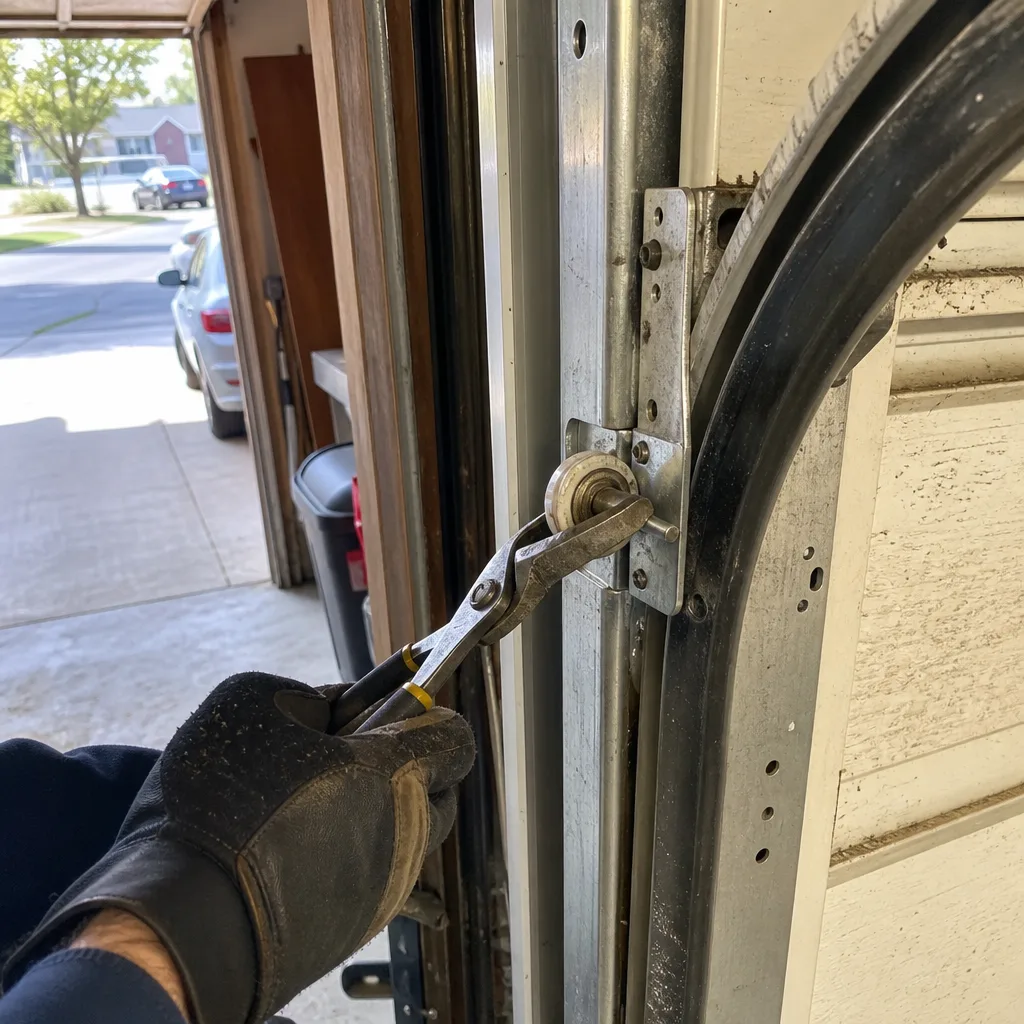
- Track inspection for loosened fasteners: Sustained wind vibration works track bolts loose over several seasons. Run your hand along the vertical and horizontal tracks and feel for movement. Any track play at all should be tightened now, before wind loading turns it into an off-track door.
- Opener motor housing dust ingress: Unplug the opener, remove the outer cover, and look for a fine gray film coating the logic board and motor windings. In our experience across Anaheim’s neighborhoods, homes closer to the 91 and 57 freeways see noticeably more particulate accumulation. Dust on a logic board shortens its life and can cause intermittent operation.
- Weatherstripping perimeter check: Run a finger along the side and top weatherstripping, feeling for brittle spots, cracking, or gaps. Dry heat plus wind is what kills weatherstripping here, and a failed seal lets dust into the garage at the exact time the winds peak.
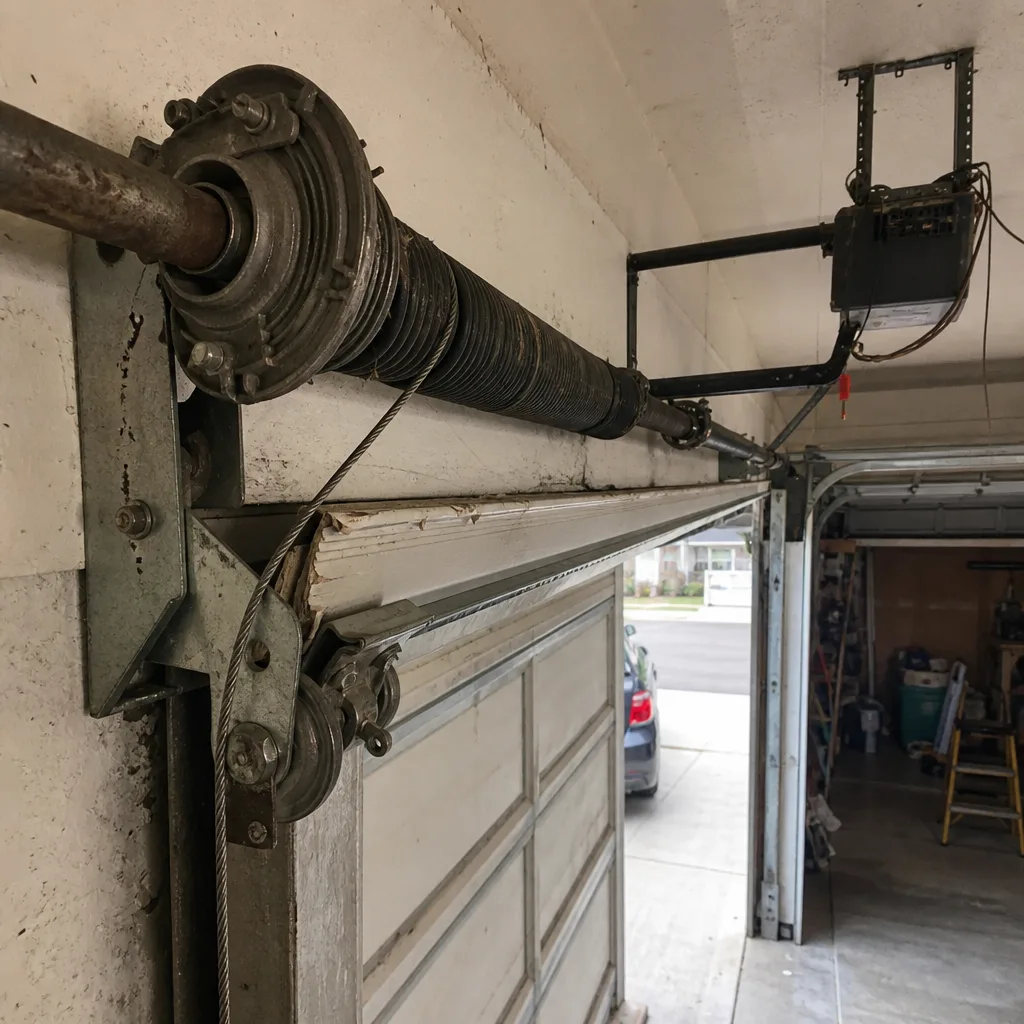
- Tension spring visual check: Look at both torsion springs above the closed door. A clean break is obvious; a developing one looks like a spring that’s no longer sitting squarely in its bracket or shows a visible gap in the coil. This is not a DIY repair, but a visual check before wind season catches most failures early.
The third item on that list, the dust ingress check, is the one most generic seasonal maintenance guides never mention. They’re written for places where the seasonal threat is snow or rain. In Anaheim, it’s airborne particulate moving at 30 mph. High-tension springs and opener internals are dangerous components to work on, and we don’t recommend opening motor housings if you’re not comfortable; what we’re describing is a visual check, not a service procedure. If you see heavy dust or any loose track hardware in September, that’s a call to us at Garage Door Repair in Anaheim for a proper seasonal service before the wind season starts.
Summer Heat and Torsion Spring Tension: What Metal Expansion Does to Balance
Anaheim’s summer heat, particularly the stretches where inland zip codes like 92805, 92806, and 92807 sit above 95°F for consecutive days, changes the physical behavior of the torsion system. Torsion springs are made of oil-tempered steel, and steel expands measurably when heated. A spring that was wound to balance a 160-pound door at 75°F behaves differently at 100°F. The expansion reduces spring torque slightly, and the result is a door that’s heavier to lift by hand and harder on the opener motor.
Here’s what that means practically for an Anaheim homeowner:
- Balance drift is real but often misdiagnosed. A door that opened smoothly in April and feels sluggish in August is not necessarily failing. It may simply be the summer-heat drift described above. The test: disconnect the opener with the door in the down position (using the red release handle), then lift the door manually to waist height and let go. A properly balanced door stays put or drifts only slightly. If it sags noticeably, the spring needs attention.
- Re-test after any heat wave. We recommend re-testing balance after any week where daytime highs stayed above 95°F for four or more consecutive days. This isn’t paranoia; it reflects how the steel behaves in Anaheim’s inland summer heat pattern.
- Opener motor temperature compounds the issue. A door slightly out of balance puts more load on the opener motor, and an opener motor already running hot in a 110°F garage goes into thermal overload more easily. That’s the classic mid-heat-wave failure where the opener stops responding for 20 minutes and then works again.
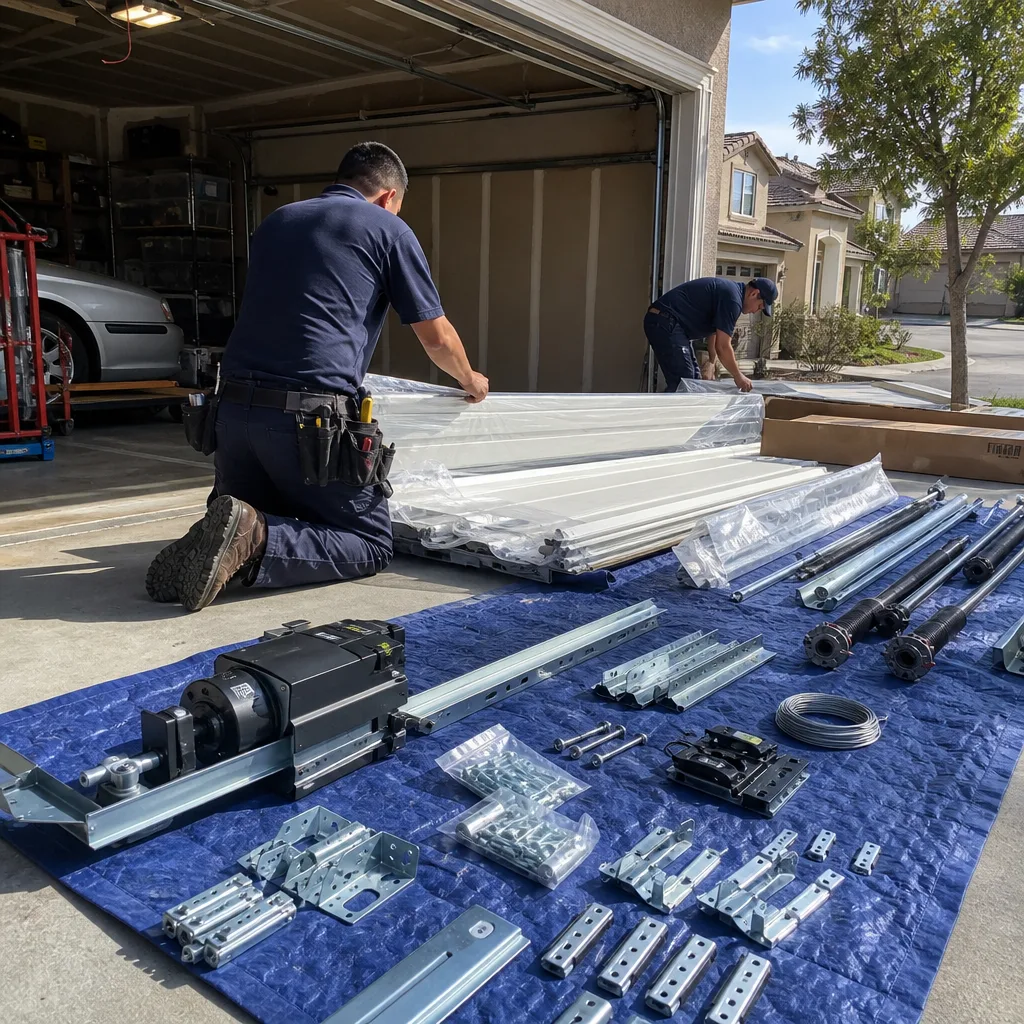
If the balance test fails, that’s a professional repair, not a DIY adjustment. Torsion springs are under extreme tension, and the winding or unwinding of a garage door spring is one of the few genuinely dangerous tasks in home maintenance. What a professional does is measure the existing spring’s wire diameter, coil count, and inside diameter, then wind a replacement to the exact torque spec for your door’s weight. That’s the kind of specificity that matters; a spring wound “by feel” is a door that may work fine in June and drift badly by August. If you’re seeing seasonal balance issues, that’s a conversation we have regularly with Anaheim homeowners, and it’s a service we provide with a flat, written price before any work starts. See DIY vs Professional Garage Door: The Anaheim Homeowner’s Decision Guide to understand when to call in help.
Marine Layer Season: Humidity Cycling from June Through July
The Marine Layer, that gray stratus deck that sits over Anaheim most mornings from June through early July, creates a humidity cycling pattern that’s specific to Southern California coastal communities. The overnight marine layer can push relative humidity above 85%, and the afternoon burn-off drops it back below 40%. That daily cycle, repeated for six to eight weeks, has specific effects on garage door components, particularly wood panels and seal materials.
Here’s what Anaheim homeowners should know about the marine layer’s effect:
- Wood panel movement: Solid wood and wood composite garage door panels absorb moisture from the humid nighttime air and release it in the dry afternoon. Repeated daily cycling causes panels to expand and contract, which over time cracks paint adhesion along panel seams and can separate frame joints on older doors. Homes in the flatlands closer to the 5 freeway see more of this effect than the hillside areas above the marine layer, but it’s a factor citywide.
- Bottom seal compression: This one is counterintuitive. The moisture makes the rubber bottom seal temporarily more pliable, which means it compresses more fully against the slab. That’s good in the short term. But when the seal dries out later in the summer, the rubber memory set by that compression can create a permanent low spot that doesn’t rebound. A seal that seals well in July can leave a gap by September. That’s part of why the September pre-Santa Ana check of seal compression matters.
- Paint and finish adhesion: For painted wood or wood composite doors, marine-layer season is the worst time to repaint. The high overnight humidity prevents proper curing, and paint applied in July can fail by December. If a wood door needs repainting in Anaheim, September through November is the window, after the marine layer has cleared and before the first winter rains.
- Hardware surface rust: The hinges, brackets, and track hardware on older doors, especially those with galvanized rather than stainless components, can show light surface rust after a marine-layer season. It’s cosmetic in most cases, but it’s a warning sign that the protective coating is degrading, and it’s worth noting during your fall inspection.
If you have a wood door in Anaheim and you notice cracked paint along panel edges after a marine-layer season, the panel itself is usually fine; it’s the finish that’s failing. Wood door repainting or refinishing is something we advise on frequently, and if you’re considering a door replacement, the panel material choice matters here in ways it doesn’t in Phoenix or Dallas. We talk through those tradeoffs in detail during Garage Door Installation in Anaheim consultations, because the right material decision for a marine-layer and UV-exposed climate is not obvious from a generic buying guide.
Winter Temperature Drops and Lithium Grease Viscosity in Opener Drive Systems
Anaheim winters are mild by any national standard, but the overnight lows in December and January, particularly in the inland neighborhoods and the canyon-adjacent areas, routinely drop into the low 40s. That’s enough of a temperature swing to change the viscosity of the lithium-based grease used in garage door opener drive systems. Grease that’s smooth and easily worked at 70°F thickens noticeably at 40°F, and that thicker grease increases the load on the opener motor and drive gears right at the moment the motor is also fighting colder, denser air.
Here’s what that means in practical terms for Anaheim homeowners:
- Sluggish cold-start operation: The first open cycle of a cold winter morning is often noticeably slower and noisier than the same cycle in the afternoon. That’s not a failing opener; it’s the physical reality of grease at low temperature. A Genie or Chamberlain opener with chain or belt drive will exhibit this; the effect is more pronounced on screw-drive openers because the screw interface has more surface area in contact with the grease.
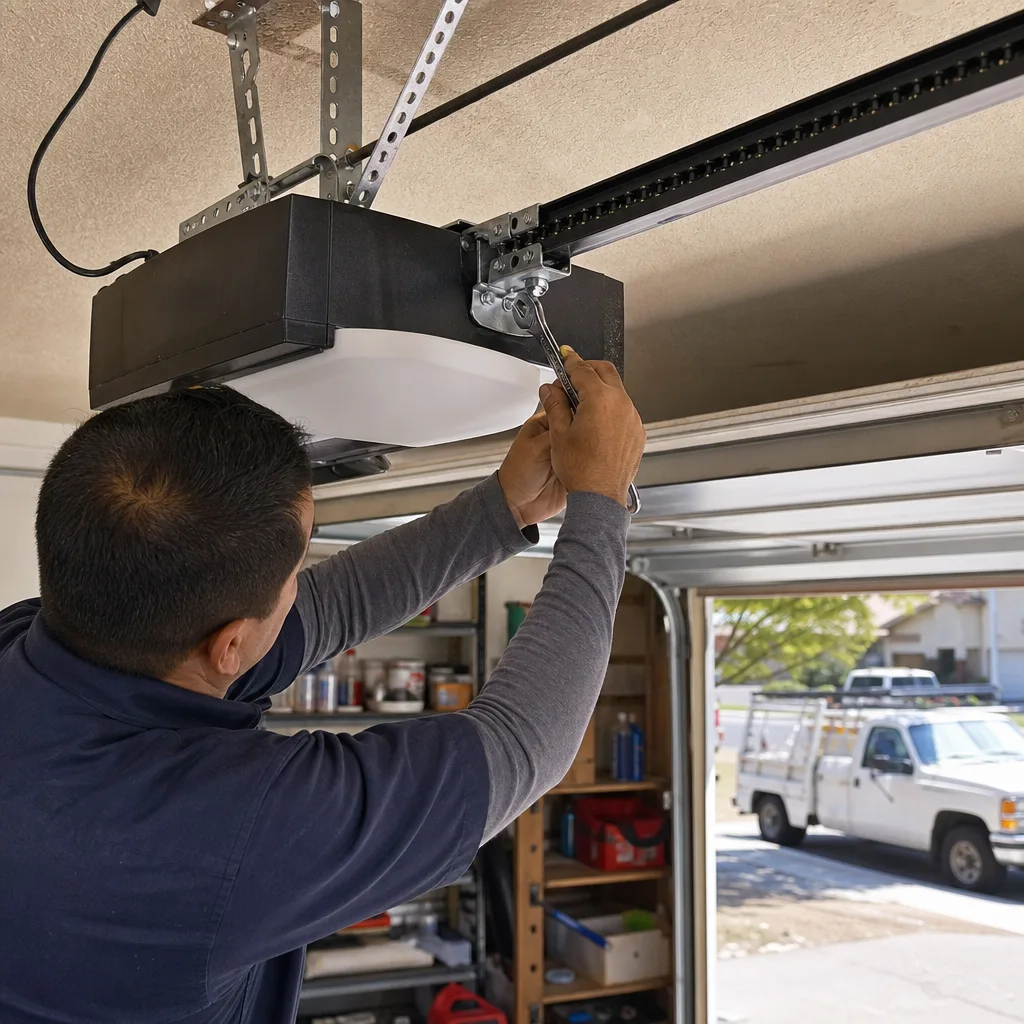
- Grease application interval: For Anaheim’s climate, we recommend inspecting and, if needed, refreshing lithium grease on the opener drive system once per year, ideally in November before the coldest nights arrive. Use a white lithium grease formulation compatible with your specific opener model; some openers, especially newer belt-drive models from LiftMaster and Chamberlain, are designed to run with factory-applied lubricants only, and adding grease can actually cause issues.
- Track and roller lubrication, not grease: Homeowners sometimes confuse the opener drive system (which needs grease or a factory-specified lubricant) with the door tracks and rollers (which need a silicone-based spray lubricant at most, and in many modern nylon-roller systems, nothing at all). Greasing the tracks is a persistent DIY error that attracts dust in Anaheim’s dry air and creates a grinding paste. Don’t do it.
- Steel panels with factory finish: The polyester-based factory finish on Amarr and Clopay steel doors performs well in UV, but it will fade gradually and noticeably over 10 to 12 years, particularly on darker colors and south-facing elevations. The fade is cosmetic, but it’s an early warning that the finish’s protective function is degrading; once the coating starts to chalk, the underlying steel is exposed to moisture and corrosion risk.
- Aluminum panels: Aluminum doesn’t rust, but the anodized or powder-coated finishes on premium aluminum doors still fade under Anaheim sun exposure. Powder coating holds up better than anodizing in our experience, but both will show fade on a 12 to 15 year horizon. Aluminum doors from Wayne Dalton and Amarr are common in modern Anaheim homes, and the material choice is primarily about weight and aesthetics, not UV resistance.
- Wood composite: Composite panels hold up better than solid wood under UV, but the paint or stain finish on any wood-based door has the shortest UV life of the three materials. Expect to repaint or restain a wood composite door every 4 to 6 years if it takes direct afternoon sun. Solid wood doors are the worst case: refinishing every 2 to 3 years is common for a sun-exposed wood door in Anaheim, and neglect leads to cracking and warping that paint will not fix.
- September inspection (pre-Santa Ana): Perform the full pre-wind checklist from the Santa Ana section above: bottom seal compression, track fastener check, opener motor housing dust check, weatherstripping perimeter check, and tension spring visual check. Address anything marginal now, before the wind season.
- March inspection (post-winter, pre-heat): Test door balance manually after the winter’s cold temperatures and before the summer heat arrives. Inspect the bottom seal for winter stiffening cracks. Check opener drive system for grease condition from a winter of cold-weather operation. If you skipped a November grease service, March is the time.
- Monthly, year-round, five minutes: Watch and listen to the door through one full cycle. Unusual noises, jerky motion, or visible track movement are the early warnings. The visual and auditory memory of a properly functioning door is a homeowner’s best diagnostic tool; changes stand out.
- Skipping the September seal check because it doesn’t rain in Anaheim. The assumption that dry means safe is the single most common misconception we encounter. Anaheim’s wind-driven dust is what kills seals and weatherstripping, and a failed seal in November lets that dust into the garage and the opener housing all winter.
- Greasing the garage door tracks. This appears in generic online guides and makes sense to people who grew up greasing everything that squeaks. In Anaheim’s dry climate, grease on tracks immediately attracts dust and becomes a grinding paste that accelerates roller wear. Modern nylon rollers and smooth steel tracks don’t need lubrication; if they’re noisy, replace them.
- Adjusting torsion spring tension without a tension gauge. This is the dangerous one. Torsion springs are under hundreds of pounds of tension, and attempting to adjust them without the right tools and training is a serious injury risk. If the balance test fails, that’s a professional repair, no exceptions.
- Repainting a wood door during marine-layer season. June and July’s high overnight humidity prevents proper paint curing and leads to premature paint failure. If a wood door in Anaheim needs repainting, do it between September and November, after the marine layer clears and before winter rains.
- Ignoring a door that works “most of the time.” Intermittent operation, especially on hot summer days when the opener goes into thermal overload, is diagnostic information. It’s telling you the door is out of balance and the motor is working harder than it should. Waiting until it fails completely turns a spring replacement into a spring replacement plus an opener repair.
- Using the wrong grease on a belt-drive opener. Many modern belt-drive openers from LiftMaster and Chamberlain are designed to run with factory lubrication only; adding off-the-shelf lithium grease to the belt or sprockets can void the warranty and cause premature belt wear. Check the manufacturer’s specification before lubricating anything on a newer opener.
One more winter-specific note: the rubber compounds in bottom seals and weatherstripping stiffen at lower temperatures, even the relatively mild lows Anaheim sees. A seal that’s already degraded from summer UV exposure and Santa Ana wind abrasion is more likely to crack in January than in July. That’s another reason the fall inspection matters; catching a marginal seal in September prevents a failed one in December. If you need an opener inspection or a seal replacement, the same team that handles our Garage Door Opener Repair & Installation in Anaheim work is the one that handles seasonal service calls, so the person looking at your opener has seen hundreds of Anaheim homes’ openers across every season.
Year-Round UV Exposure: Panel Finish Degradation on Steel, Aluminum, and Wood Composite
Anaheim’s annual UV index averages 7 to 8 through the summer months and stays moderate through most of the winter. Over a 10-year horizon, that’s a substantial cumulative UV load on garage door panel finishes, and the degradation profile varies meaningfully by material. A door that faces south or west and catches full afternoon sun will degrade noticeably faster than one on a shaded north-facing elevation, and that orientation difference can be the deciding factor in whether a door needs refinishing at year 8 or at year 14.
Here’s what the UV timeline looks like by material in Anaheim’s climate:
The practical takeaway for Anaheim homeowners: if your steel door is 12 years old and the south-facing side looks noticeably lighter than the north-facing side, the finish is in the degradation phase. You can either repaint now (and if you do, use a paint system rated for direct Southern California UV, not interior wall paint) or start budgeting for replacement. New steel door replacement in Anaheim typically runs $1,100 to $2,600 for a standard two-car garage door including installation, with wood composite running from $1,800 to $3,800. See our Garage Door Cost Breakdown: The Anaheim Homeowner’s Reference for 2026 for fuller pricing details. If you’re weighing refinish vs. replace, we give flat written quotes either way, and the photo record of the panel condition is yours to keep; it’s Clause 4 of The Haven Standard, and it’s the reason the customer sees the failed or degrading part before anyone quotes a replacement. Most Anaheim homeowners don’t realize how much panel finish life varies by which direction the door faces; it matters more than the brand in this climate.
The Twice-Yearly Maintenance Routine That Fits Anaheim’s Climate
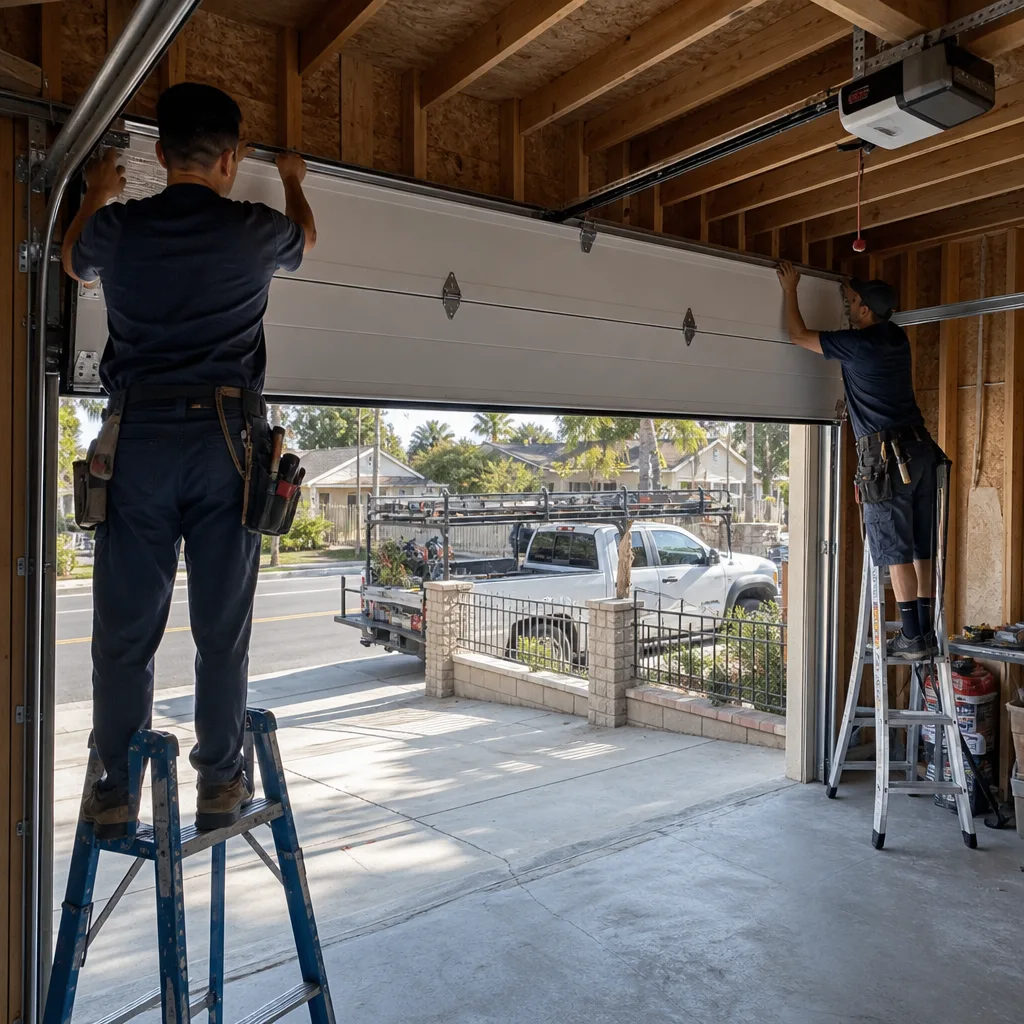
A generic “lubricate and inspect twice a year” recommendation is fine as far as it goes. But the timing of those two inspections in Anaheim’s climate should be specific, and here’s what we recommend based on the seasonal failure patterns we’ve observed in this city since 2015:
This schedule, September and March with monthly five-minute checks, is calibrated to Anaheim’s specific seasonal stresses: Santa Ana winds in fall, cold-temperature grease viscosity in winter, and summer heat’s effect on spring tension. A schedule built for a different climate might tell you to check different things at different times, and that matters because the failure modes are different. For the homeowner who wants someone else to do this, our technicians follow this exact calendar, and every visit concludes with a documented photo record of what was found and what was done.
Common Mistakes to Avoid
When to Call a Professional
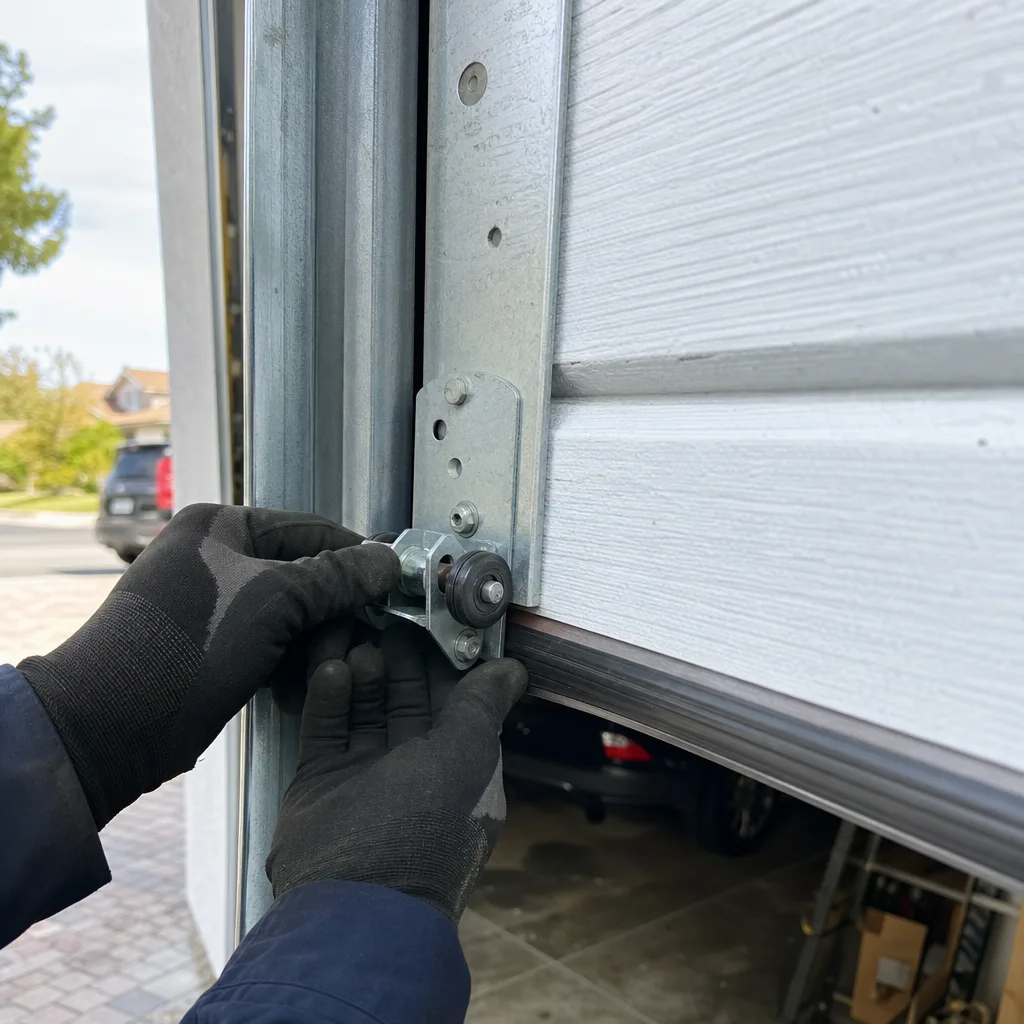
The balance test, the seal check, and the visual spring inspection are all homeowner-friendly tasks that take a few minutes. But some conditions are genuinely dangerous to address without training and proper equipment. Any deterioration involving torsion springs, high-tension cables, or opener motor internals should trigger a professional service call, not a YouTube tutorial. Torsion springs under tension can cause serious injury if they’re handled incorrectly, and opener motor housings contain capacitors that hold charge after the unit is unplugged. If you see a cracked or broken spring, a frayed cable, or any track that’s bent or pulled from the wall, that’s the line where DIY stops. Servo Garage Doors Anaheim offers free estimates in Anaheim with a flat, written price and written scope delivered before any work begins. Call (949) 822-8002.
Frequently Asked Questions
A seasonal garage door inspection and tune-up in Anaheim typically runs $89 to $189 depending on what’s included, with seal and weatherstripping replacement adding $60 to $140 per door. We provide a flat written price and a written scope before any work starts, which is Clause 1 of The Haven Standard. Call (949) 822-8002 for an exact quote; estimates are free.
Twice a year is the right cadence for Anaheim’s climate: once in September before the Santa Ana wind season, and once in March after winter cold and before summer heat. A five-minute monthly visual and auditory check through one full open/close cycle is also worth doing. Most failures we see in Anaheim could have been caught by one of these inspections.
Santa Ana winds carry fine inland dust and grit at sustained speeds that drive that particulate into the opener motor housing, abrade rubber seals and weatherstripping, and vibrate track fasteners loose over repeated wind events. The damage is cumulative, not dramatic, which is why the September pre-wind inspection catches most of it early.
Yes. Heat causes the metal in torsion springs to expand slightly, reducing spring torque, and a door that’s slightly out of balance forces the opener motor to work harder. In a 110°F Anaheim garage, that can cause thermal overload, where the opener stops working for 15-20 minutes and then works again. If your opener does this on hot days, the spring tension is the likely culprit, not the opener.
For spring, cable, and opener failures, we carry the parts on the truck, and same-day service is standard across Anaheim and surrounding Orange County. We always quote a flat written price before any work begins, and every visit ends with a documented photo record of what was found and what was fixed. Call (949) 822-8002; a live person answers 24/7.
No. The flat written price and written scope are delivered before any work starts, and that’s the price you pay. If the technician finds something additional during the repair, that’s a separate conversation with a separate written price before anything else is done. There is no surprise invoice at the end; the documentation is the point.
The Bottom Line
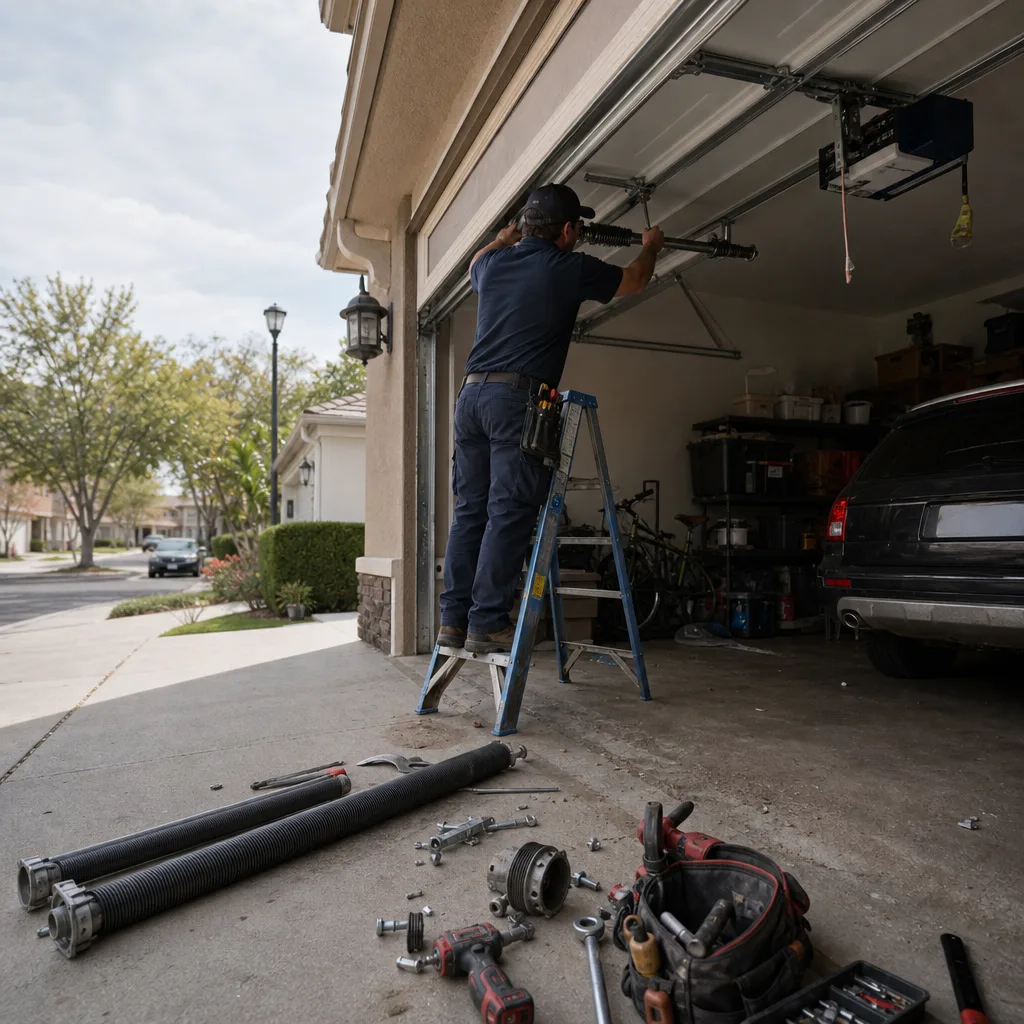
Anaheim’s garage door failure patterns are specific to this climate: Santa Ana wind-driven dust abrading seals and coating opener internals, summer heat subtlety changing spring tension, marine-layer humidity cycling cracking wood finishes and permanently compressing bottom seals, and winter temperature drops thickening lithium grease in opener drive systems. A generic seasonal guide written for a humid or rainy climate misses most of what actually fails here. The twice-yearly September and March inspection schedule catches the problems that turn into Anaheim’s most common repairs, and when something does cross the line from maintenance to repair, a flat written price before work starts is the protection that matters most. For a comprehensive overview, see The Complete Guide to Garage Door in Anaheim.
Written by Marcus Deller, Owner at Servo Garage Doors Anaheim, serving Anaheim since 2015.